




LALITPUR:- Nepali Congress President Gagan Kumar Thapa has said that the country is in a favorable situation to reform and that Nepal should not miss this opportunity.
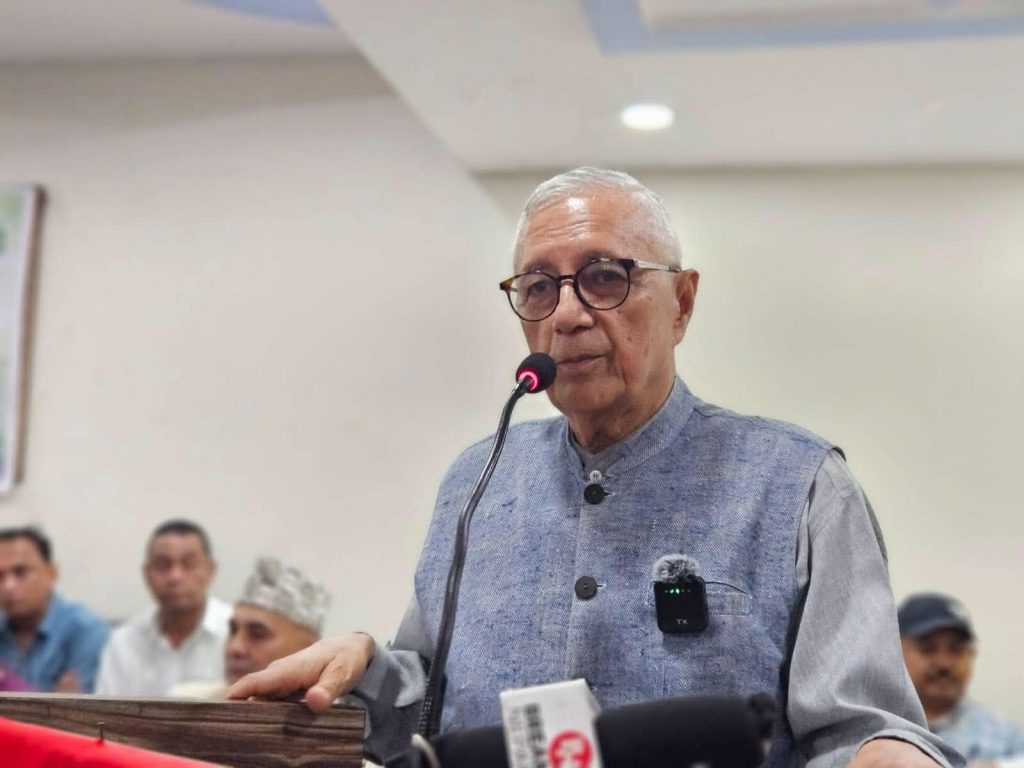
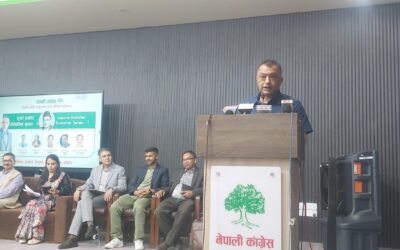
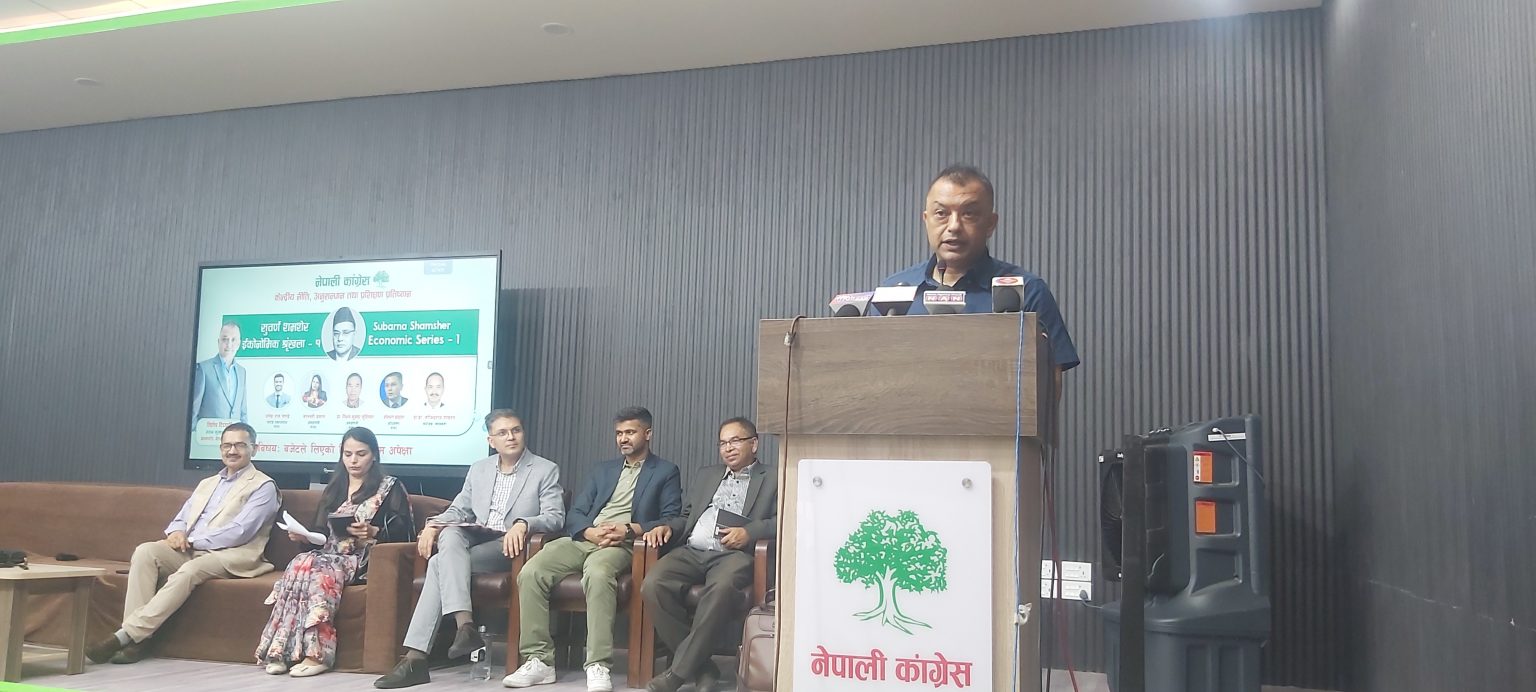
On the occasion of the conclusion of the special discussion on the topic of ‘Direction taken by the Budget and General Expectations’ of the first series of the ‘Suvarna Shumsher Economic Program’ organized by the Central Policy, Research and Training Institute of the Nepali Congress at the party’s central office in Sanepa today, President Thapa said that today’s program has provided an important opportunity for discussion in the parliament.
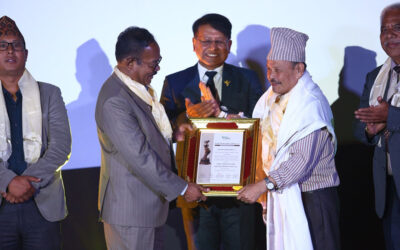
Honoring the reforms and efforts made by Nepal’s first elected Finance Minister, Subarna Shumsher Rana, President Thapa informed that a monthly series of the Subarna Shumsher Economic Program will be made mandatory. He said that Finance Minister Rana made a transformative contribution by eliminating the tax burden and depositing it in the state treasury, and managing the budget system. He mentioned that the 2048 BS government brought about a major change in the economy by increasing foreign exchange reserves to a level that would not last for a month.
“The government has brought a budget in a favorable situation, following the election held in an irregular situation, with the search for the rule of law and the demand for good governance. This budget does not seem to have paid enough attention to solving the structural problems that the Finance Minister himself has acknowledged. The government has now brought many of the works that we have prepared to improve through the budget. The government should pay attention to the reforms that were made by the government in the past when it was less favorable and improve them,” said President Thapa.
Speaker Thapa emphasized that lawmakers should be able to participate in debates and discussions within the parliament by paying attention to gradual and structural reforms, adding that lawmakers should pay attention to what reforms were implemented through ordinances and what was right.
“The Nepali Congress had also included a personal income tax limit of Rs 1 million in its commitment letter. This is a matter of gradual reform, but the government has adopted a policy of collecting taxes in a smart way. It is not a luxury for ordinary people to study in private schools. The government is collecting taxes from the ordinary and middle classes. It is collecting taxes through health treatment in private health institutions. Taxes have been increased by imposing VAT on electricity above 50 units,” he said.
Stating that the policies adopted in the current budget do not help in increasing productivity and creating employment, Chairman Thapa said that this budget is not transformative in supporting the majority of farmers in Nepal who engage in farming.
Thapa Said, “At a time when small farmers in the agricultural sector are drowning in debt, subsidies have been introduced to benefit those investing more than Rs 20 million. It is not middle class-focused. The budget has not been able to focus on reducing production costs and increasing productivity. Rather than encouraging the private sector in the information technology sector, the government has been trying to do it itself and narrow its scope. In the case of land banks, the government has not been able to pay attention to the situation where only regulations are sufficient.”
Stating that the Congress will support the proper mobilization of concessional loans, he said that they will oppose bad things and support right things, and will not create chaos by opposing unnecessary things. “Based on the results, we will support the right policies and oppose the wrong policies,” said President Thapa.
Stating that the current government, which has received the same level of favorability as in 2048 BS and the same level of public support as in 2015 BS, should focus on positive economic transformation and the rule of law, President Thapa said that the rule of law should be for the best interest and the best interests rather than using the law as a weapon.
Economist Dr. Semanta Dahal said that even though the Finance Minister has repealed 15 laws related to the economy, they have not been repealed, adding that although the amendments sought to be made to the company law are positive, the hassle of obtaining licenses and government letters has not been eliminated. Economist Dahal said that the budget has not brought about major structural economic changes.
Economist Prof. Binay Prasad Kusiat alleged that there is no budget that will bring any changes in higher education and technical education and that the budget is designed to close Nepal’s universities.
He opined that as the country’s GDP increases, the budget for education is decreasing, the budget for research is being reduced, and 60 percent of education is done by the private sector and 40 percent by the government, suggesting that the concept of free education is weakening.
Economist Saraswati Dhakal said that budget implementation will not be effective if the focus is only on ancillary issues rather than on the main issues in investment and regulatory reforms. She said that the implementation of the economy’s laws is weak, that investable funds are piling up in banks and financial institutions due to lack of work as per the commitment to improve the investment environment, and that despite the provision for investment abroad, there is a situation where capital is fleeing due to lack of sufficient clarity.
Chartered Accountant Umesh Raj Pandey said that the recent amendment to the income tax system is causing economic deviations, adding that the Economic Act is being taken as the main basis for formulating tax laws, and that the things announced in the budget are not included in the Economic Act.
Prof. Dr. Govinda Raj Pokharel said that only 73 percent of revenue was collected in the current fiscal year, indicating that the government’s expenditure is not in a position to meet the ambitious target of achieving an economic growth rate of seven percent.