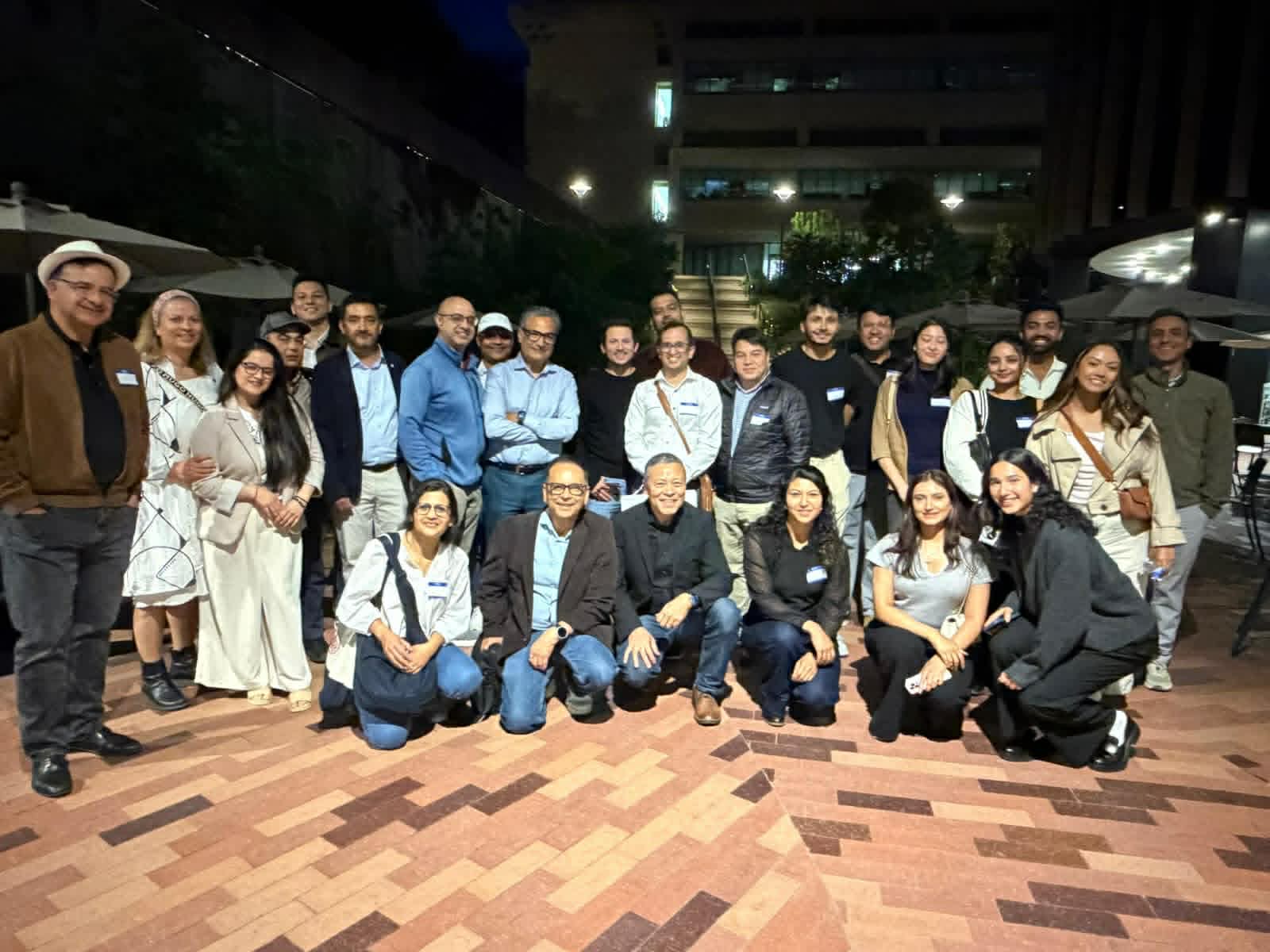
SAN FRANCISCO:- An important dialogue and workshop program on ‘Policy Roadmap for Mobilizing Diaspora Knowledge, Skills, and Talents in Nepal’s Development’ has been concluded at the prestigious Stanford University in the US.
Dr. Khagendra Raj Dhakal, founder and president of the Nepal Policy Institute (NPI), was invited as the keynote speaker at the program organized by the Global Nepali Professional Network (GNPN).
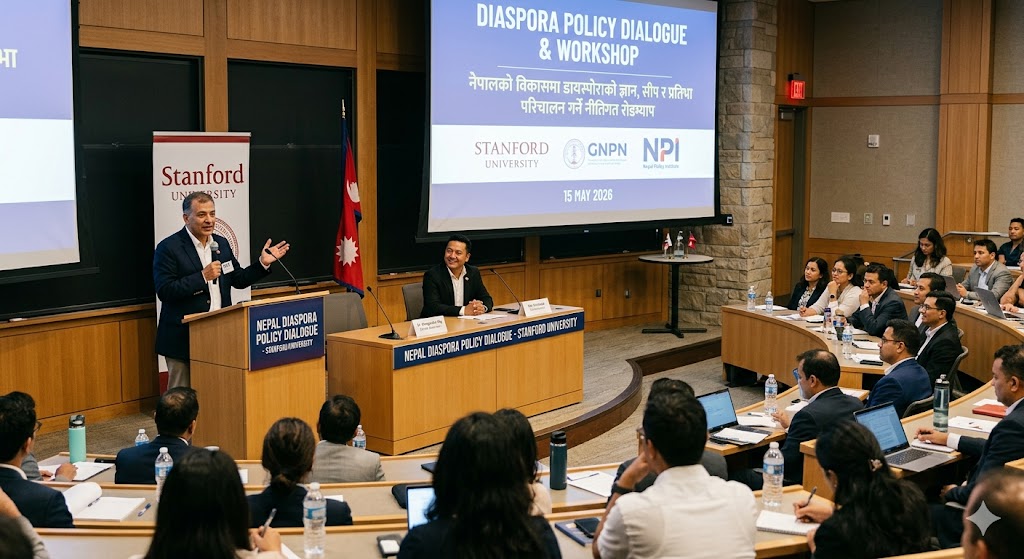 The three-hour dialogue was well attended by professionals of Nepali origin, academics, researchers, entrepreneurs, technologists, students, media personnel, representatives of Nepali consular offices, and policymakers from the San Francisco Bay Area and other regions.
The program included serious discussions on how Nepal can structure the intellectual capacity, professional experience, and talent of Nepalis around the world to support the country’s development, rather than focusing solely on remittances.
Inaugurating the program, current chairperson of GNPN, Nile Shrestha, recalled that since the organization’s establishment in 2006, it has been inviting experts who can contribute to Nepal’s policymaking and development and holding debates.
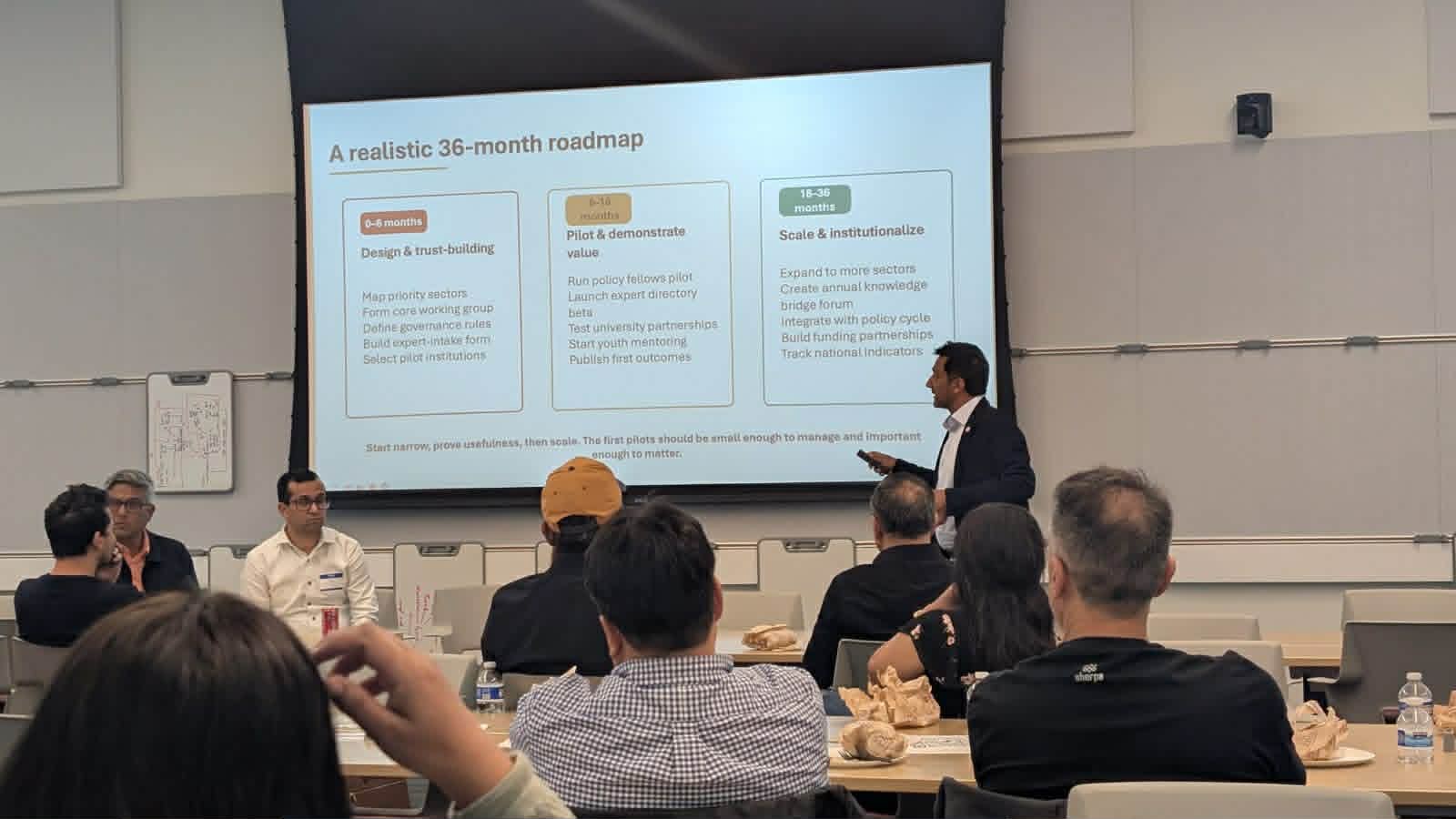 He informed that Dr. Swarnim Wagle, Dr. Bishwa Poudel, and Mahavir Pun, among others, had already been invited and expressed his happiness to organize this dialogue at Stanford on the occasion of Dr. Dhakal’s visit to the US. The program was moderated by Nisha Thapa of GNPN.
In the inaugural presentation session, Dr. Dhakal shared his perspective on mobilizing diaspora knowledge and talent, followed by an interactive workshop on practical policy development by dividing the participants into five thematic groups.
The workshop saw an enthusiastic exchange of policy ideas, focusing on five key areas: Policy and Governance, Research and Universities, Innovation and Entrepreneurship, Youth Leadership and Mentorship, and Digital and Civic Engagement.
Dr. Dhakal, who has been teaching at King Mongkut’s University of Technology North Bangkok in Thailand for the past 15 years, said that the main challenge now is to build a reliable system that can effectively connect the intelligence, creativity, and commitment of Nepalis scattered around the world.
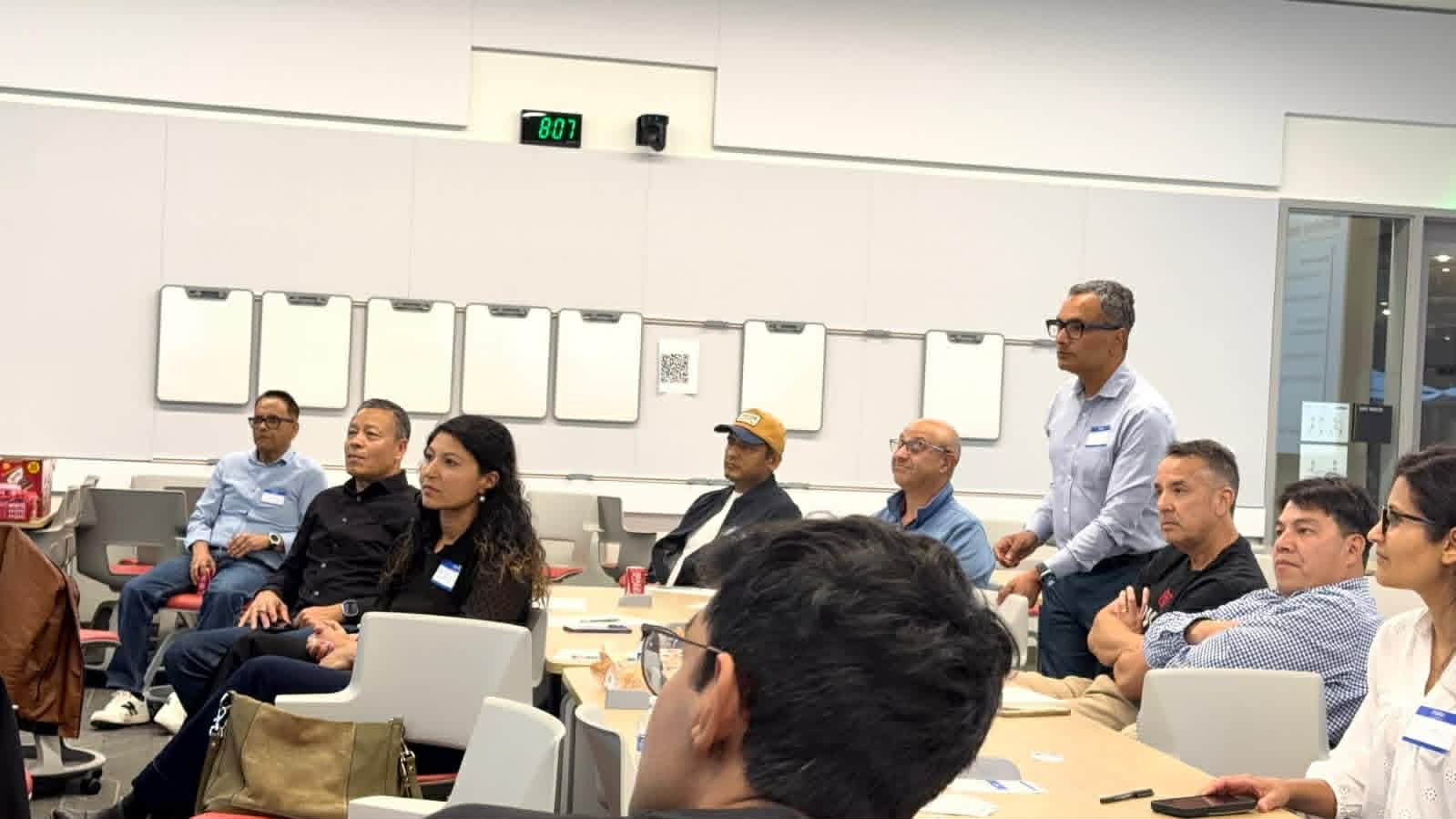
He presented the preliminary findings of a recent study conducted by NPI Fellow Lisa Maharjan in the US, UK, and Australia, pointing out that while nearly 70 percent of the diaspora is willing to contribute to Nepal, only 20 percent have been able to engage meaningfully due to the lack of a clear path or institutional mechanism.
On the occasion, he also informed that the current Minister for Foreign Affairs, Hon. Shishir Khanal, has expressed deep interest in engaging the Diaspora Knowledge Network and is willing to hear recommendations directly from the diaspora community. The participants also emphasized the need for a structured policy framework, recognizing the diaspora as a strategic partner for Nepal’s larger national development.
Concluding the workshop, Dr. Dhakal called on GNPN representatives to participate in the NPI-GNPN Joint Policy Task Force. This task force aims to develop a mutually beneficial ‘Diaspora Knowledge Recapitalization Framework’ and operational roadmap that will connect diaspora professionals, Nepali institutions, and government stakeholders.
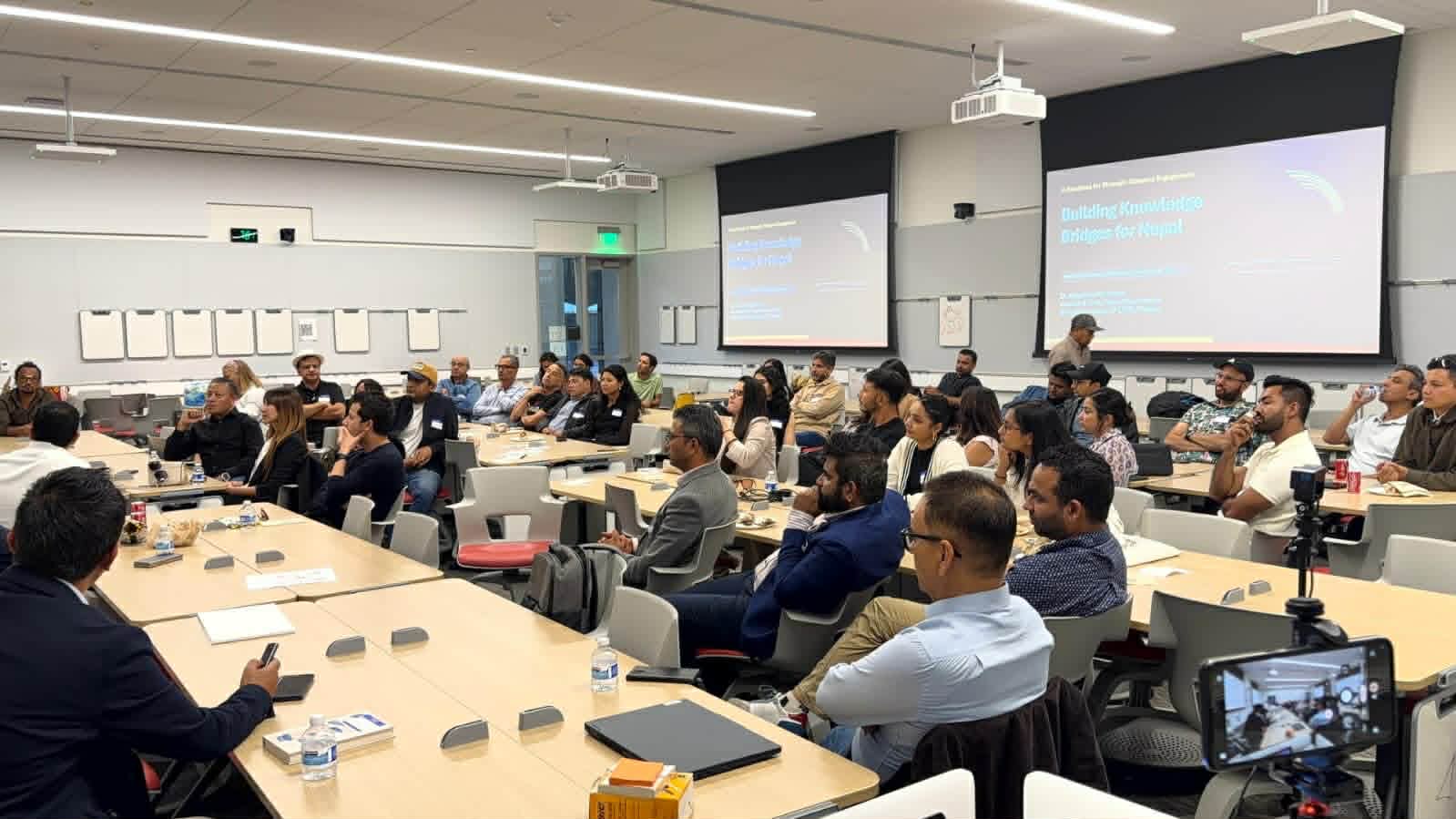 An initial draft of the concept paper in this regard will be prepared within the next two weeks and this dialogue will be expanded to Nepali knowledge networks around the world, informed Dr. Dhakal. GNPN and NPI have clarified that this initiative is a completely non-partisan policy dialogue and knowledge diplomacy effort, saying that it will make a constructive contribution to Nepal’s policy development and open the door to a broader international dialogue.







Comments