VIRGINIA:- The area around West Oaks Road in Virginia was transformed into a vibrant hub of indigenous Asian culture on Sunday.
It was a unique gathering place for music, dance, food, and cultural displays from different countries. The festival, organized with the initiative and goodwill of the community, was a multicultural center, filled with displays from different countries.
Another reason this year’s festival was special and historic was that it also included the 10th anniversary of the Drikung Dharma Surya Center, which has been providing spiritual and cultural guidance to the local community for decades.
This milestone for the center added a deep sense of gratitude, introspection, and collective pride among the festival participants.
The festival also came at a very auspicious time. It coincided with the month of Saka Dawa, considered the holiest in Mahayana Buddhism and promoting good deeds, charity and goodwill.
For many devotees and participants, this was not just a coincidence but a golden opportunity for spiritual and cultural unity, which made the festival more dignified than just entertainment.
The main highlight of the festival was the centuries-old cultural performances from various countries taking to the stage. Artists from Mongolia, Tibet, Vietnam, Laos, Cambodia, and Nepal brought their traditions to life in a grand manner on modern American soil.
The deep throat singing and melodies of the Mongolian artists evoked the vast steppes and nomadic life, while the meditative postures of the Tibetan dancers conveyed the peace of the Himalayan monasteries.
Similarly, the Vietnamese Mekong River culture, Laotian agricultural traditions and Cambodian court dances mesmerized the audience as they brought the colorful flow and vibrancy of Southeast Asia to the stage.
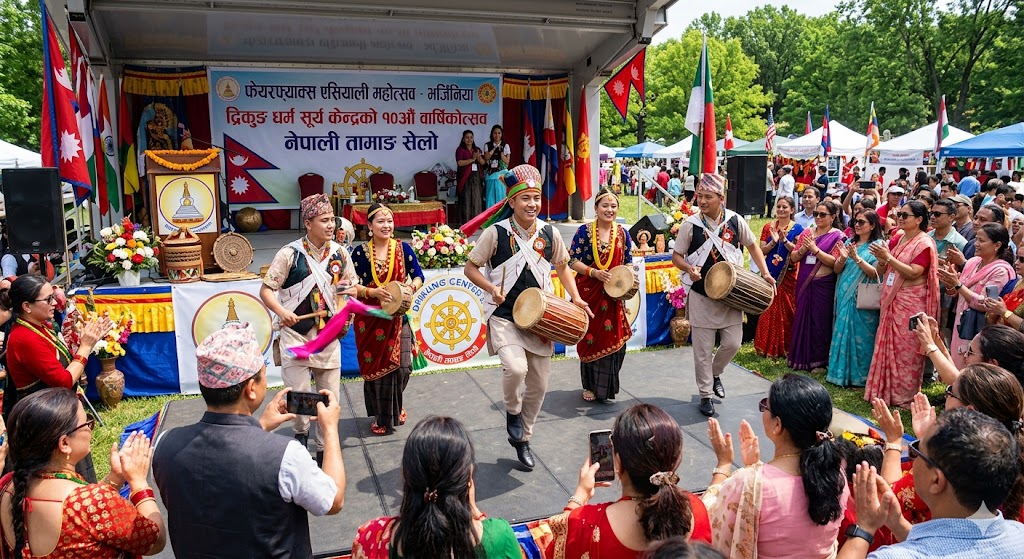
Nepal’s performance was particularly notable and became the center of attraction in this multicultural crowd. Led by Dig Bahadur Tamang, a prominent figure who brought to the stage the original identity, energy and intimacy of the Nepali Tamang community, the artists presented the captivating Tamang cello and damphu dance.
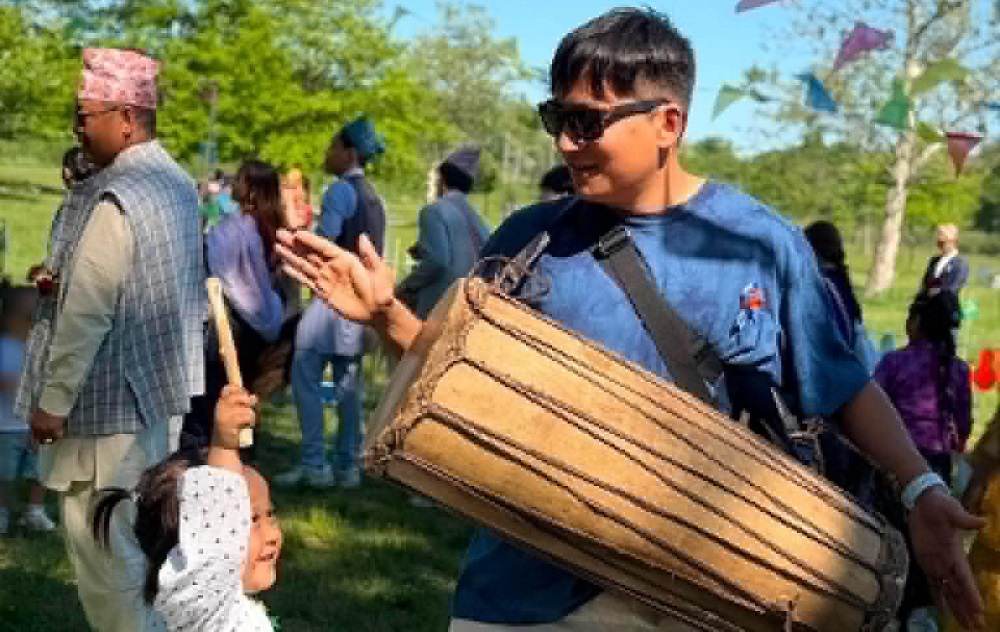
The sight of the dancers dancing in a circle, with bright smiles and energy, to the rhythm of the Damphu and the melodious tune of the Tungana, was truly captivating. Even foreign spectators unfamiliar with Nepali culture were captivated by the circular movements and collective energy of the dance, and began clapping and tapping their feet to the beat. This common language of music and dance instantly erased all cultural differences and bound everyone present in one circle.
The open area outside the stage was no less than a living museum. Stalls adorned with Mongolian traditional dresses (deel), Tibetan prayer flags, Vietnamese ao dai, Laotian lions (sinh), Cambodian silk scarves, and Nepali traditional jewelry added to the festival’s charm.
In addition, the aroma of various delicious Asian dishes made the atmosphere even more festive. In particular, the original Nepali taste of ‘Sel Roti and Aalu Achar’, which was specially provided by ‘Tandoori Night Restaurant’ to relieve the boredom of homesickness, was openly praised by many participants as “the real deal”.
Another unforgettable moment of the festival was the Manjushree dance performed by Yagyaman Shakya. The peace on his face as he entered the stage, the beauty reflected in his hand gestures, and the spiritual depth revealed in every move of the dance captivated the entire audience in an instant.
The Tamang Dampu dance, with the Tamang Selo of Dampu also performed along with the deep rhythm and melodious tune of Tungana, Tungana, attracted the audience not only to watch but also to move their feet to the rhythm.





Comments