







“It is very difficult to bring down waste from Camp 4. Climbers are faced with a choice between saving their lives or carrying waste.”
KATHMANDU:- Noted climber Phurba Tenzing Sherpa’s eyes water as he watches the snow and glaciers around the base camp of Mount Everest, the world’s highest peak, melt away rapidly.
Phurba , who has earned fame and fortune by taking local and foreign climbers to the summit of Mount Everest, is also concerned that if the snow cover on Mount Everest and other mountains continues to decline at this rate, future generations will not be able to see the mountains at all.
Phurba says, “Earlier, a five-minute walk from the base camp would bring you a patch of snow, but now it is difficult to find snow even after walking for an hour and a half. This can be considered a direct effect of climate change.” He says that mountaineers from all over the world who come to climb Everest are now experiencing the changing nature of the mountain firsthand.
He says, “As the world’s highest peak, Mount Everest, is not just a mountain, but also a symbol of courage, challenge, and natural beauty, it is a matter of concern for everyone to join hands in its conservation.”
As the average temperature of the Earth rises, the rate of melting of glaciers in the Himalayan region is accelerating, the timing and amount of snowfall is changing, and rainfall patterns are changing rapidly, according to climbers. The Himalayan region is considered a highly sensitive region to climate change. He says that many places on the snow-covered route now have to be crossed over bare rock. Some mountaineers are worried that the possibility of visiting Nepal in the future will be reduced as old layers of rock and ice are now visible in areas that were once covered in thick snow.
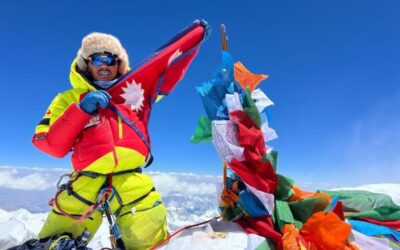
Experienced mountaineer Phurba Tenzing Sherpa, born in 1988 in Rolwaling, Dolakha, has set foot on the world’s highest peak, Mount Everest, 18 times. Sherpa, who started climbing the mountain at the age of 14 by working as a porter, first climbed Mount Everest in 2007. He has previously set foot on mountains including Manaslu and Abadbalam. The loss of snow in the Everest region is not just a matter of visual change; it is also beginning to have a direct impact on climbing risks, the mountain ecosystem, water resources, and the lives of local communities. This is why concerns about a snowless Everest have grown in recent years.
While the weather was relatively stable until a few decades ago, it is now subject to rapid fluctuations. The weather, which seems normal in the morning, can turn bad within a few hours. “The route of Mount Everest has changed a lot,” he says. Parts that were once covered in snow are now exposed rock. This has made climbing more difficult and risky.”
It seems that climbing may face additional challenges in the future as the ice structure is becoming unstable, especially in the Khumbu Icefall area. He says that due to the lack of snow, the ice is melting faster and cracks and crevasses are opening up more.
He says that the problem of waste management is becoming more complex than the global problem created by climate change. Although waste management seems to be effective to some extent up to Camp 2 of Everest, the situation is still worrying at Camp 3 and Camp 4. “It is very difficult to bring down waste from Camp 4. Climbers are faced with a choice between saving their lives or carrying waste.”
Sherpa says that although the Everest Pollution Control Committee (SPCC) is making efforts to manage waste, it is still a big challenge to remove old tents, oxygen cylinders and other waste piled up in the upper area.
Sherpa, who returned from a successful climb of Everest with a Chinese national on May 20, says that this problem is increasing every year.
This time, 495 climbers from 56 countries of the world had obtained permits for Everest, while more than 1,000 had climbed it. He suggested that the government and the concerned bodies should take concrete steps in time to maintain the natural beauty and safety of the mountain. Not only this, he said that the possibility of skilled Sherpas fleeing abroad and unhealthy competition between climbing companies could also have an impact on the number of climbers in the future cannot be ruled out.
Experienced and skilled Sherpas are increasingly migrating abroad in search of better opportunities. He says that although Sherpas from Makalu, Solukhumbu in Sankhuwasabha, and Rolwaling in Dolakha are currently active in mountaineering, there is a shortage of skilled manpower.
Nepali Sherpas, who have made a name for themselves as courageous guides in the world, have been facing difficult challenges with extraordinary ability. Despite being aware of the risks that can even lead to death in the process of mountaineering, they have been playing a leading role in helping mountaineers from different countries of the world fulfill their dreams.
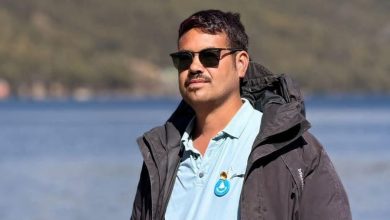
Raju Silwal, a journalist who has been writing about tourism, says that since record-breaking climbers do not receive much respect and facilities in Nepal, it is necessary for the government to take a policy decision and take the initiative to honor record-breaking climbers to prevent them from fleeing abroad.
Similarly, unhealthy competition among mountaineering companies has raised questions about the quality and safety of services. He says that while earlier climbing used to cost up to $50,000, now teams are being taken for $20-25,000 due to competition. This has increased the risk of less experienced people being deployed instead of experienced Sherpas, he says.
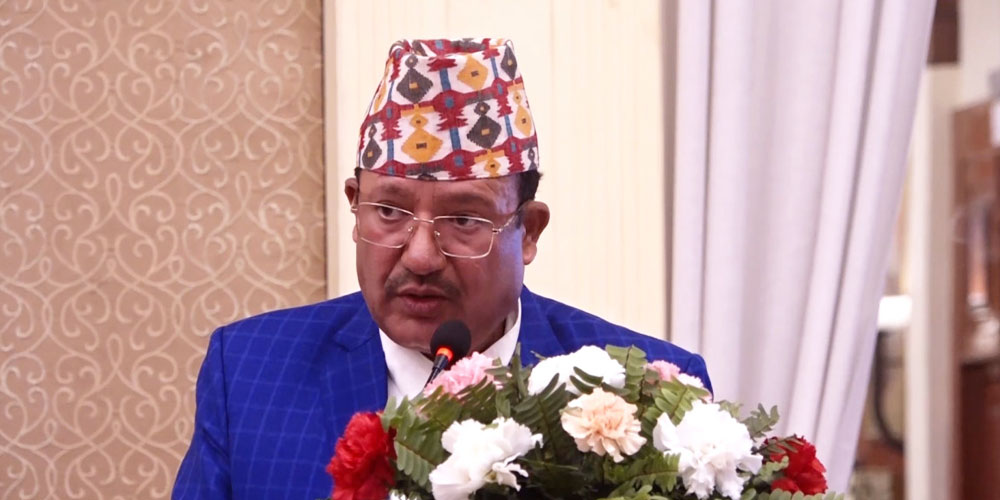
Nepal Mountaineering Association General Secretary Rajendra Lama says the Nepal government should also increase its studies and monitoring based on data collected by various research institutions on the impact of climate change on the Himalayan region, such as glacier conditions, snow cover and temperature changes. He says such studies will help in future risk assessments and policy planning.
The Lama emphasizes the need to prioritize the protection of the Himalayan environment, waste management, and sustainable tourism at the local level, along with efforts to reduce greenhouse gas emissions at the global level to mitigate the impact of climate change.
Most foreign climbers who come to climb Everest have reported firsthand the lack of snow. Some have reported seeing less snow than expected while reaching the base camp and the upper camp, and some climbers have expressed interest in him, says Phurwa. He also has his own experience of seeing significant changes in some places compared to a decade ago. He says that the changes that have occurred, such as the changing landscape of Everest, should not be taken for granted.
Changes to the mountains in Nepal, including Mount Everest, will not only reduce the number of climbers visiting the mountains, but will also have a negative impact on the economy. A decline in tourists to the mountains, which are an important source of income for Nepal, could affect the livelihoods of locals and cause problems for the country’s economy.
This year, Nepal received Rs 1.26 billion 4.741 billion 306 million from a total of 31 mountains, including Rs 1.81 billion 1.725 billion in royalties from Everest. This year, 1,195 climbers from 79 countries obtained permits to climb mountains higher than 6,500 meters.