RUPANDEHI:- 453 Nepali citizens who were taken to India by a group involved in human trafficking and smuggling in the name of networking business have been rescued.
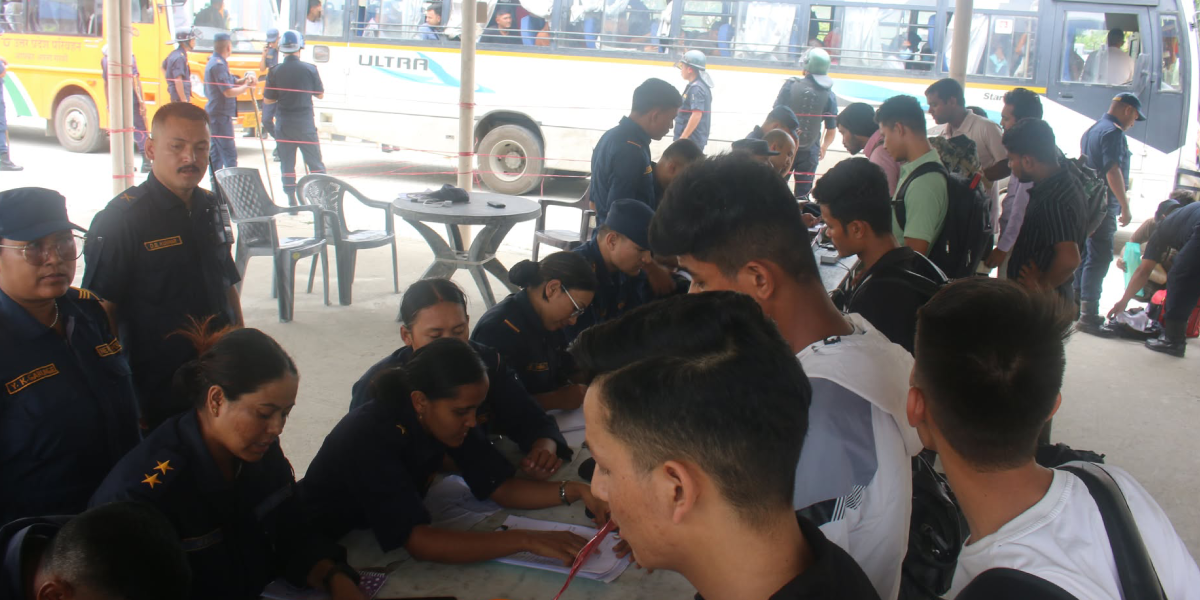
453 Nepalis rescued from Kushinagar in Uttar Pradesh, India, have been brought to Nepal through the Belahiya border crossing and kept at the District Police Office in Rupandehi, where an investigation has been initiated.
The police have launched an investigation to find the accused who lured Nepalis to India in the name of networking business under the guise of lucrative jobs and high income.
The rescued Nepalis were brought to Bhairahawa via the Sunauli-Belahiya border on Saturday afternoon in eight Indian buses. They are currently being kept at the District Police Office, Rupandehi, where details are being collected, screening and interrogation is underway, according to the police.
According to Rupandehi Police Chief SP Janak Bahadur Shahi, the rescue operation was carried out with the support of Indian Police, coordination of the Nepali Embassy in India, and a team deployed under the leadership of Nepal Police SSP Prakash Malla.
He said that during the initial investigation, it appeared that some of the rescued people were stranded, some were missing, and some were lured to India and taken hostage.
According to the police, about half of those rescued are women. After investigation, the victims will be handed over to their relatives and sent home, and further legal action will be taken against those involved in the incident.
Ambika Joshi, Minister Counselor at the Nepali Embassy in India, said that the rescue was possible after a long period of study and coordination based on complaints that Nepalis have become victims due to networking marketing.
He said that the Uttar Pradesh government and Indian security agencies have provided significant support in the rescue operation. SSP Prakash Malla of Nepal Police said that the rescue operation was conducted in coordination with the Uttar Pradesh and Kushinagar police after studying and analyzing information for about six months.
According to him, Nepali youth were lured into the networking business by promising them high earnings, then pressured to bring in more members, and then subjected to mental stress if they did not perform as expected. Initial investigations have shown that both the victims and the operators are Nepali.
Naveen Joshi of the organization Kin India, which supported the rescue campaign, said that the initiative for the rescue was taken after discovering the miserable condition of Nepalis in Kushinagar.
According to him, up to 15-16 people were kept in one room, no proper arrangements were made to protect them from the heat, and pressure was exerted on additional relatives and acquaintances to become members.
According to the police, the gang used to bring young people from various districts of Nepal to Kushinagar via Sunauli with the lure of lucrative jobs and good income.
Upon reaching there, the investigation revealed that they were collecting money ranging from seven thousand Indian rupees to one hundred thousand rupees per person and expanding membership in the style of a networking business.
According to SP Shahi, the investigation was initiated after receiving information that at least one thousand Nepali youth from Lumbini, Koshi and Sudurpaschim provinces were being held in Kushinagar.
The Nepal Police coordinated with the Indian Police after the victim’s relatives filed a complaint alleging that they were being held hostage and demanded money.
Police said that after four days of continuous efforts, the rescue operation was successful with the help of the Indian administration and police. They said that they had received information that there was an attempt to collect money in the name of membership fees, pressure to add new members, and even threaten the families of those who failed to become members.
A detailed investigation has been launched into the identity of those involved in the incident, human trafficking, fraud, and aspects related to organized crime.



Comments