KATHMANDU:- The Nepal Policy Institute (NPI) has submitted a nine-point policy recommendation brief to the Election Commission of Nepal (ECN) and the Government of Nepal. The 25-page brief—available in both English and Nepali—presents a short- and long-term roadmap for enabling external voting for Nepali citizens living abroad. Titled “External Voting for Nepali Citizens Abroad: Options for the 2026 Election and Beyond,” the document provides evidence-based and practical guidance on how multiple external-voting methods can be implemented, identifying which options are most suitable for different country contexts.
Drawing on international experience and technology-driven innovations, the NPI policy brief proposes a hybrid model of external voting. It recommends short-term, feasible steps for introducing technology-friendly voting systems that can include millions of Nepalis working and studying overseas. The brief provides evidence-based guidance on voter registration, identity verification, technology selection, and country-specific implementation models.
NPI Chair Dr. Khagendra Raj Dhakal, who led the drafting team, said: “Considering Nepal’s migration patterns and socio-economic realities, the Philippines and Mexico offer tested pathways that Nepal can adapt quickly to ensure the participation of overseas citizens as early as 2026.”
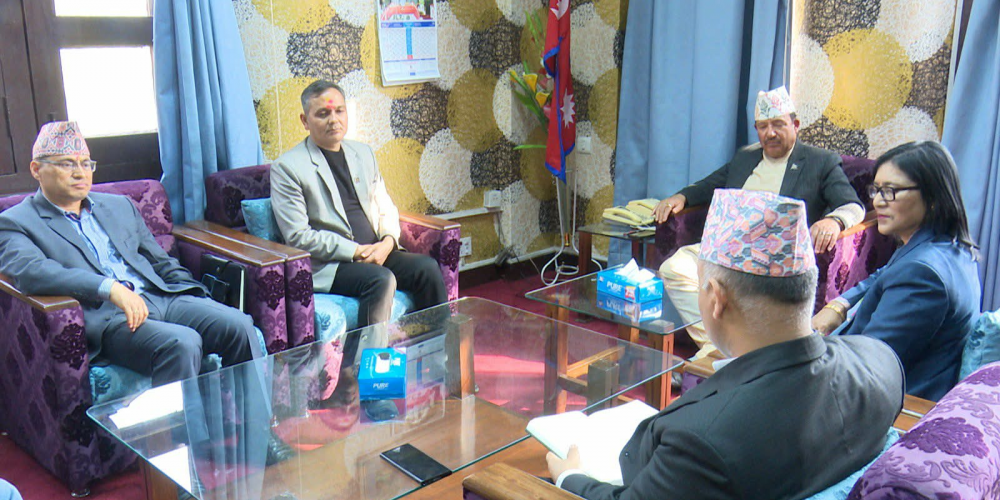
Following the formal submission to Election Commission, The NPI delegation was led by Executive Member Sharu Joshi Shrestha presented the brief’s summary to the Election Commission authorities including Election Commissioner Hon. Dr. Janaki Tuladhar, ECN Secretary Mahadev Panth, and other senior administrative and technical officials.
This submission forms part of NPI’s ongoing collaboration with the Election Commission that began since the 2022 general elections, through which the institute has been providing data-driven, evidence-based policy research, analysis and recommendations.
NPI is an independent, non-profit global policy think tank supported by the Nepali diaspora for the sustainable development of Nepal and Nepali everywhere. With a network of over 1,000 experts across 46 countries, the institute focuses on generating policy insights on migration, diaspora engagement, governance, and education. Over the past eight years, NPI has been conducting sustained dialogues, studies, and policy consultations on enabling external voting for Nepali citizens abroad.
The Kathmandu Secretariat of NPI confirmed that the policy brief has also been shared with the Ministry of Home Affairs, Ministry of Foreign Affairs, and the Office of the Prime Minister and Council of Ministers (OPMCM).
A Recommendation amid the Gen-Z Revolt’s Election Call
The NPI policy brief situates its recommendations within the political developments following the September 2025 Gen-Z-led revolt, which resulted in parliament’s dissolution and the formation of an interim government that has announced new national elections for March 5, 2026. NPI views this election as an opportunity to promote inclusive democratic participation among all Nepali citizens, both at home and abroad.
Dr. Dhakal emphasized that “a large majority of Nepali citizens living overseas are young people who contribute equivalent to nearly one-third of Nepal’s GDP through personal remittances. Yet, they remain deprived of their constitutional, human, and democratic right to vote. Excluding these ‘economic heroes’ of Nepal from shaping the nation’s political future weakens not only the legitimacy of elections but also the essence of democracy itself.”
He added that the Constitution of Nepal (2015) guarantees voting rights to all citizens, and the Supreme Court has already directed the government to make provisions for voting from abroad. “Ignoring over four million Nepalis abroad risks undermining the credibility of national elections,” he warned, adding that enabling their participation would strengthen Nepal’s democracy, making it more inclusive, legitimate, and accountable.
NPI Proposes a Hybrid Model for External Voting
Learning from the experiences of the Philippines (2025) and Mexico (2024), NPI recommends a hybrid model combining four voting methods:
1. In-person voting at embassies or consulates (via paper ballots or EVMs);
2. Postal voting;
3. Internet-based i-Voting; and
4. Multi-day in-country voting for registered overseas voters who return to Nepal.
According to NPI brief, while i-Voting represents the most sustainable long-term option, the combination of these four methods provides a realistic and effective short-term approach to include the maximum number of Nepalis abroad in the fast-approaching 2026 elections. This model also lays the foundation for Nepal’s future digital election infrastructure.
Summary of NPI’s 9-Point Recommendations for the 2026 Elections
1. Legal Framework
Formulate specific legal provisions to enable external voting and formally recognize digital voter registration and internet-based i-Voting for proportional representation (PR) elections. This legal foundation should define eligibility, authentication procedures, and data protection mechanisms to ensure credibility and transparency.
2. Voter Registration and Authentication
Allow online registration and verification using the national ID system or biometric passports. Applicants should submit a digital affidavit confirming they have not obtained foreign citizenship. The process should be simple, secure, and accessible to migrants, students, and other overseas citizens.
3. Recommended Voting Methods
Adopt a hybrid model combining multiple methods—embassy voting, i-Voting, postal voting, and multi-day in-country voting—reflecting lessons from other countries and the current post-Gen-Z political context.
Embassy Voting: Establish polling stations in Nepali diplomatic missions where technically and legally feasible. This is particularly practical in countries such as Oman, Thailand, Bahrain, South Africa, and Spain, where the number of registered Nepali voters can be efficiently managed.
Internet Voting (i-Voting): Implement a secure online voting system with end-to-end encryption, multi-factor authentication, and a digital audit trail. Pilot testing may begin with proportional representation seats. Proven international systems include Swiss Post (Switzerland), Smartmatic (used in Mexico), Electra/Assembly Voting (Denmark), and Sequent (Philippines).
Postal Voting: Adopt in countries with reliable postal systems such as Australia, South Korea, Japan, Europe, and the United States.
Multi-Day Voting: Open designated polling centers in Nepal for 3–4 weeks, enabling registered overseas voters—especially those in India and South Asian countries—to vote when returning home within the election period.
4. Voting Period
Allow 3–4 weeks for all four proposed voting methods to ensure maximum participation. This flexible timeframe reflects international experience, acknowledging that many migrant workers cannot vote on a single fixed day due to employment and mobility constraints.
5. Flexible Voter Verification
Permit voter identification through biometric passports or citizenship certificates where national IDs are unavailable. Enable remote online registration and verification for individuals whose biometric data already exist within government databases, ensuring inclusivity and administrative efficiency.
6. Establishment of an External Voting Department
Create a dedicated External Voting Department within the Election Commission, Nepal (ECN) to coordinate all aspects of the hybrid model, streamline communication with embassies, and ensure policy consistency and accountability.
7. Independent Cybersecurity Audit
Before implementation, conduct independent cybersecurity audits and penetration testing in collaboration with national IT firms or academic institutions, such as Kathmandu University’s Department of Computer Science, to ensure system integrity and voter trust.
8. Evidence on i-Voting Preference
Citing recent international data, the brief highlights that during the Philippines’ 2025 mid-term elections, approximately 98% of overseas registrants expressed a preference for i-Voting over e-Voting method during the digital voter registration process. In contrast, in Mexico’s 2024 federal elections, actual voting data show that about 85% of ballots cast through technology-assisted methods were submitted via i-Voting. These findings demonstrate a strong global inclination toward i-Voting systems, suggesting that Nepalis abroad are also likely to favor this method for its convenience and accessibility.
9. Communication and Outreach
Implement a comprehensive communication strategy using both social media and traditional media channels to inform and educate potential voters about the registration process, voting options, and safeguards. Strategic outreach will be critical to ensuring awareness, trust, and high participation rates.
Clarifying i-Voting vs. e-Voting
The NPI policy brief clarifies a key distinction between two terms that are often misunderstood by the general public. e-Voting refers to the use of electronic voting machines at designated polling stations, while i-Voting allows voters to cast their ballots securely online from any location. As noted in the brief, “i-Voting is a distinct and more inclusive innovation that has already been successfully implemented in more than 30 countries worldwide.”
Medium- and Long-Term Vision
For the medium to long term, NPI recommends that Nepal institutionalize i-Voting as the main election system. This would not only enfranchise Nepalis abroad but also benefit internally displaced voters, including migrant workers, students, and marginalized populations. With legal reforms, improved digital infrastructure, and enhanced technical capacity, Nepal can advance toward a fully digital democracy.
Background of Policy Brief
This policy brief is part of NPI’s ongoing collaboration with the Election Commission of Nepal since the 2022 general elections, providing data-driven policy analysis and recommendations. The study draws on comparative research of legal provisions for external voting in more than 115 countries and examines key cases where such systems have been implemented, identifying legal, technical, and institutional options most relevant to Nepal’s context.
The brief was co-authored by Dr. Khagendra Raj Dhakal (Chair, NPI) and Liza Maharjan (NPI Fellow). Dr. Dhakal has been researching external voting systems for the past five years and has published several Nepal-focused policy briefs on the subject. Former Chief Election Commissioner Neel Kantha Uprety served as an external reviewer, while inputs were provided by NPI Board Members Gopi Nath Mainali (former ECN Secretary), Sharu Joshi Shrestha (migration expert), Dr. Ambika Adhikari (Nepali diaspora leader), and Kedar Neupane (former UNHCR official).
The policy brief serves as an advance contribution to inform and support the decision-making process in the newly emerged context. A standard, standard NPI policy brief and a ful length research paper/white paper are forthcoming. At present, a team at NPI led by Dr. Nalini Subba, Dr. Khagendra Raj Dhakal, and Dr. Ariel Augusto is conducting a global comparative study on external voting practices.
[The full policy brief is available in both English and Nepali on NPI’s website: https://nepalpolicyinstitute. org/external-voting-for- nepali-citizens-abroad/’ ]







Comments