NEW YORK:- Nepal has called for urgent and collective global action to empower the youth population in Least Developed Countries (LDCs) through quality education, digital connectivity, innovation, entrepreneurship and inclusive growth.
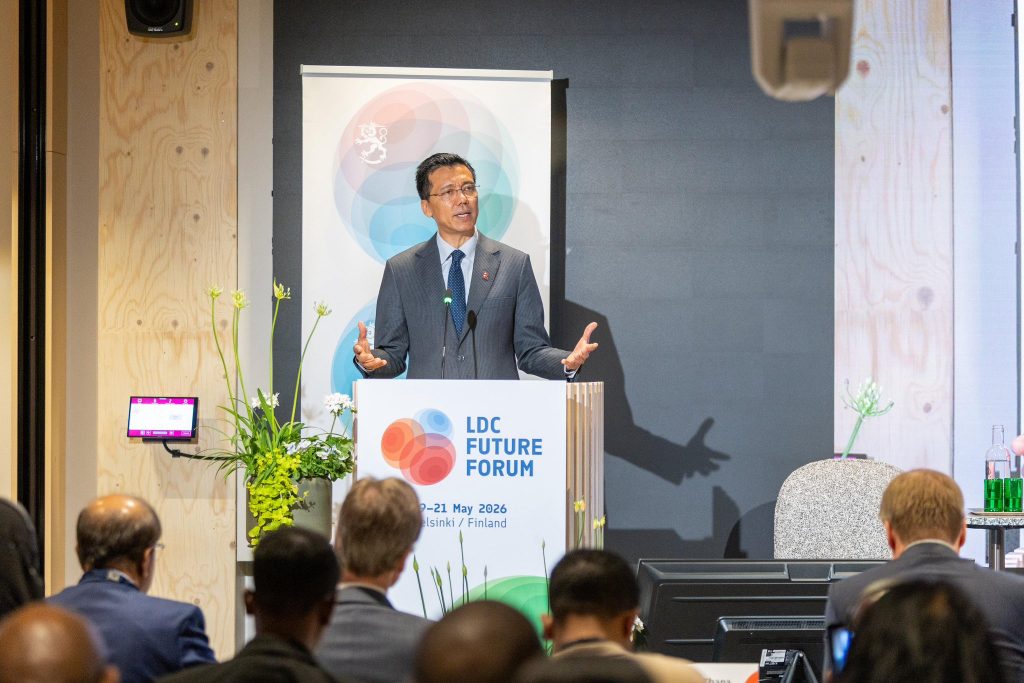
Addressing the opening session of the Fourth UN LDC Future Forum in Helsinki, Finland, Nepal’s Permanent Representative to the United Nations and Chair of the LDC Group, Lok Bahadur Thapa, said the future of LDCs depends on whether the international community is prepared to invest in its young population.
The three-day forum is being held from May 19 to 21 under the theme “Transforming LDCs by Empowering the Youth Population through Education, Innovation and Inclusive Growth.”
Speaking on behalf of the Group of Least Developed Countries, Ambassador Thapa expressed appreciation to the Government of Finland and the UN Office of the High Representative for the Least Developed Countries, Landlocked Developing Countries and Small Island Developing States (UN-OHRLLS) for organizing the forum.
He noted that nearly 60 to 70 percent of the population across the world’s 44 LDCs is under the age of 30, describing young people as the “greatest strategic asset” for transformation, resilience and inclusive growth.
“This extraordinary youth population is not merely a statistic. It is our engine of renewal and the foundation of our inclusive growth and transformation,” he said.
Ambassador Thapa warned, however, that millions of young people in LDCs still lack access to quality education, digital tools and meaningful employment opportunities. He said about two-thirds of the LDC population remains offline due to lack of infrastructure, affordability and digital skills.
“These are not technical inevitabilities, but political failures,” he said, calling the widening digital divide “not only a development gap, but a justice gap.”
Highlighting Nepal’s own experience, Ambassador Thapa said the country has been investing in education reform, technical and vocational training, digital skills and innovation ecosystems despite fiscal constraints and climate vulnerabilities.
He stressed the need for stronger international support under the Doha Programme of Action and urged development partners to operationalize initiatives such as an online university platform for LDCs with dedicated financing and genuine ownership by LDCs.
The Nepali envoy also called for expanded support to startups, technology hubs, MSMEs and youth-led entrepreneurship, particularly for women, persons with disabilities and communities in remote or crisis-affected areas.
“Empowering our youth through education, innovation and inclusive growth is not a side issue. It is the litmus test for the credibility of the Doha Programme of Action and for the 2030 Agenda in LDCs,” he said.
Concluding his remarks, Ambassador Thapa emphasized that the world must match the aspirations of young people in LDCs with tangible and scaled-up support.
“The LDCs are ready. Our youth are ready. The world must be ready for them. The time is now,” he said.
The opening session of the forum was also addressed by Finland’s Foreign Minister Elina Valtonen and UN Under-Secretary-General and High Representative for LDCs, LLDCs and SIDS Rabab Fatima.









Comments