KATHMANDU:- For decades, Nepal–Qatar relations have been anchored in labour migration. Hundreds of thousands of Nepalis have worked in the Gulf nation, sending home remittances that sustain families and underpin Nepal’s economy. Strong air connectivity and steady people-to-people movement have reinforced that bond.
But as economic priorities evolve on both sides, there is growing recognition that the relationship must expand beyond manpower supply and remittance flows.
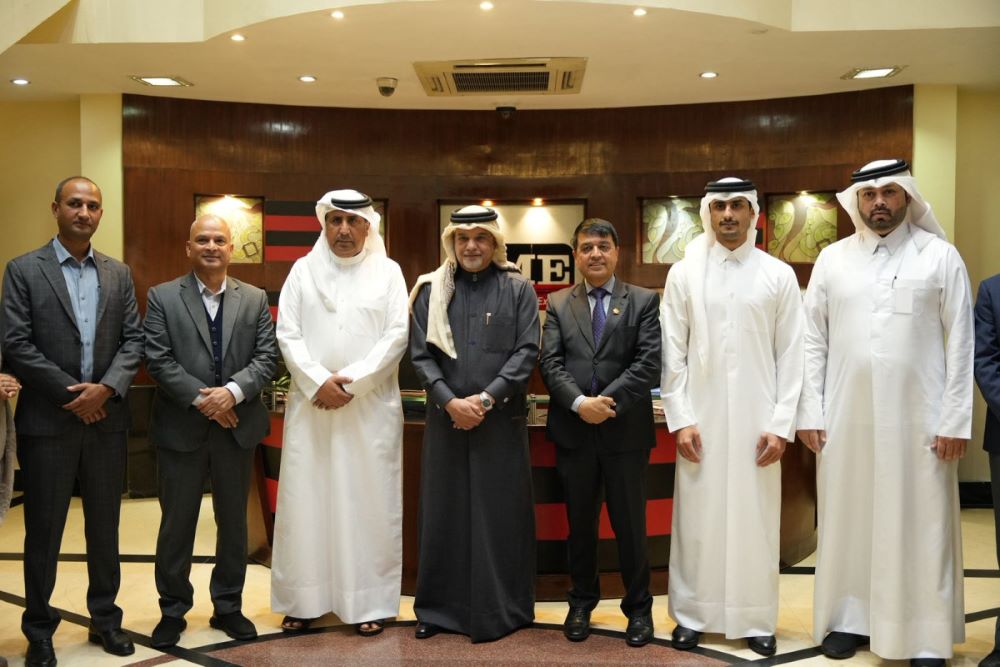
A recent visit by a delegation from the Qatar Chamber of Commerce and Industry has renewed discussion about repositioning bilateral ties toward investment, tourism, sustainability, and private-sector collaboration. The delegation, led by Mohamed bin Ahmed Al-Obaidli, engaged with Nepali officials and business leaders on opportunities that reflect a broader, future-oriented partnership.
Labour migration will remain an essential pillar. However, policymakers increasingly argue that the next phase of engagement should focus on building complementary strengths rather than relying predominantly on overseas employment.
Nepal offers more than labour. With abundant freshwater resources, fertile land, and diverse climatic zones, it has the capacity to supply high-quality agricultural products — including green vegetables and other fresh produce — to water-scarce regions. In a country like Qatar, where food and water security are strategic priorities, partnerships in sustainable agriculture, agro-processing, and supply chains could create mutual benefit.
At the same time, Nepal’s geography and cultural landscape stand in striking contrast to Qatar’s desert terrain. Snow-capped mountains, rivers, forests, and UNESCO-listed heritage sites position Nepal as a unique tourism destination for Qatari visitors seeking different climates and experiences. Enhanced tourism cooperation — supported by direct air connectivity — could turn this geographical contrast into an economic opportunity.
Beyond trade and tourism, another untapped dimension lies in human capital.
Thousands of Nepali workers who have returned from Qatar bring with them technical expertise, discipline, exposure to international standards, and sector-specific skills in construction, hospitality, aviation services, and management. Yet many struggle to find productive opportunities at home.
A forward-looking Nepal–Qatar partnership could incorporate programs that channel investment into sectors where returnee migrant workers can apply and upgrade their skills. Joint ventures, vocational partnerships, and entrepreneurship initiatives could transform migration from a one-way labour flow into a cycle of skills transfer and domestic value creation.
Such cooperation would allow Qatar’s investment and private sector to engage directly in Nepal’s development, while enabling Nepal to leverage the experience of its overseas workforce for national growth.
Energy, hydropower, tourism infrastructure, hospitality, information technology, and agro-processing remain promising areas for collaboration. As Nepal continues policy reforms to improve its investment climate, the emphasis is increasingly on creating stable, transparent, and investor-friendly conditions that encourage long-term engagement.
For Qatar, diversifying economic partnerships aligns with its broader global investment strategy. For Nepal, attracting productive foreign investment is central to achieving sustainable development and reducing long-term dependence on remittances.
The challenge — and opportunity — lies in recalibrating a relationship historically defined by labour into one shaped by investment, innovation, and shared growth.
The contribution of Nepali workers to Qatar’s development will always remain a cornerstone of bilateral ties. But as both countries look ahead, expanding cooperation into food security, tourism, infrastructure, entrepreneurship, and skills utilization may define the next chapter.
Moving beyond labour does not diminish its importance. Rather, it strengthens the partnership by building a more balanced, resilient,t and mutually beneficial foundation for the future.








Comments