




‘Using natural pigments derived from turmeric, indigo, rice dust, and lampblack, women created paintings on clay walls and floors centuries before the existence of galleries or museums, tracing their origins to the ancient civilization center of the Mithila region, the birthplace of Goddess Sita.’
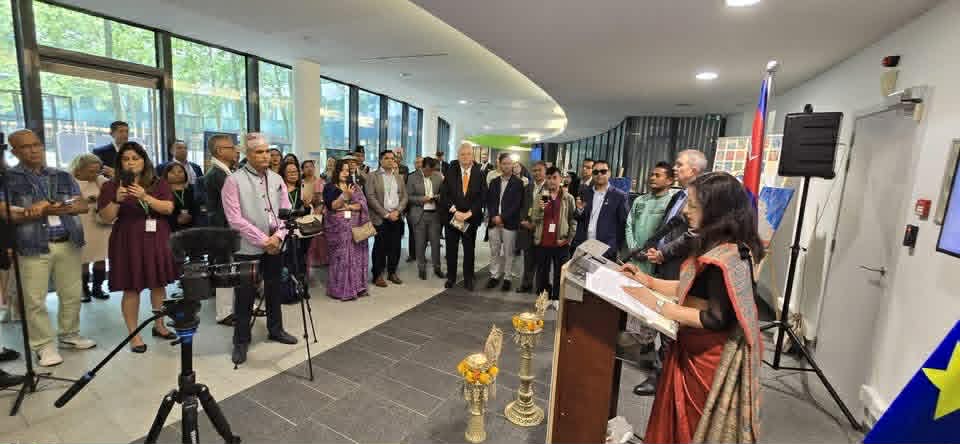
BRUSSELS:- The Embassy of Nepal and the Mithila Center in collaboration with the US and the European External Action Service (EEAS) have launched a Mithila art exhibition titled ‘Art for the Sustainable Development Goals: Mithila Heritage’ in Brussels.
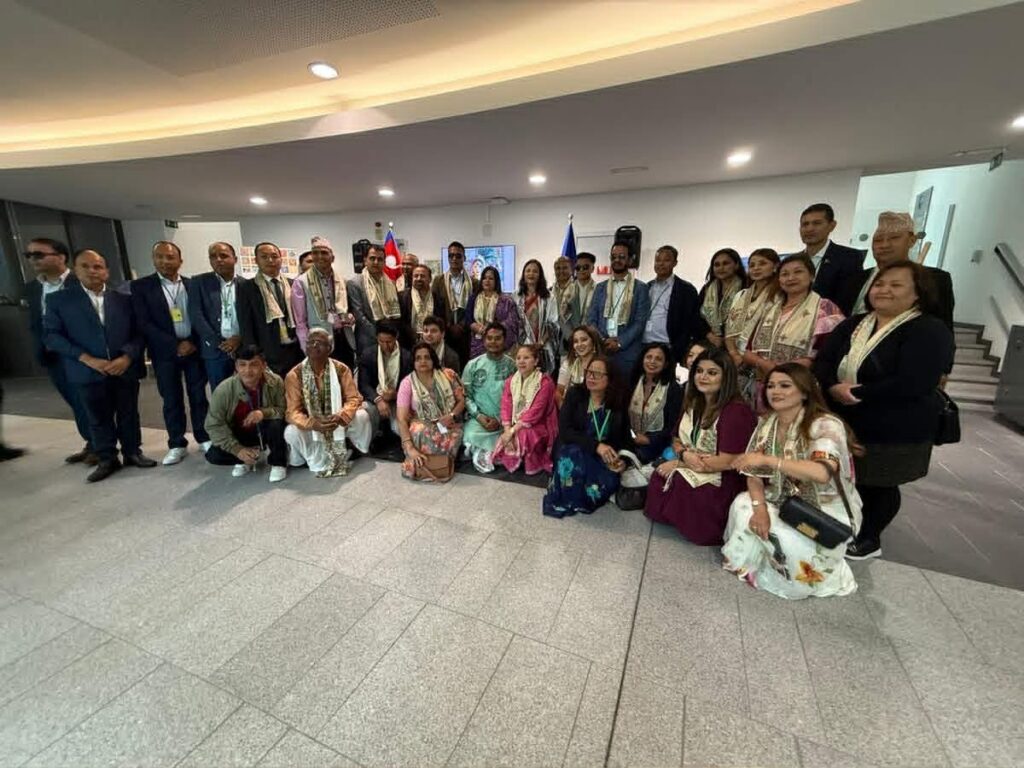
The exhibition opening ceremony was attended by ambassadors of diplomatic missions, representatives of the Belgian Ministry of Foreign Affairs, high-level officials of the European Union, Mithila artists, media personnel, and Nepali diaspora, among other distinguished guests.
Presenting Mithila heritage from the perspective of the United Nations Sustainable Development Goals, the program participants felt that the exhibition would make a significant contribution to establishing indigenous cultural heritage and the global development agenda.
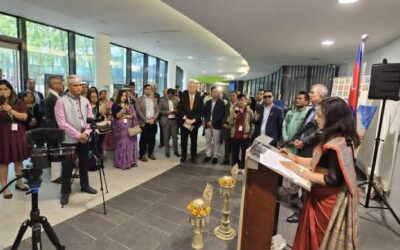
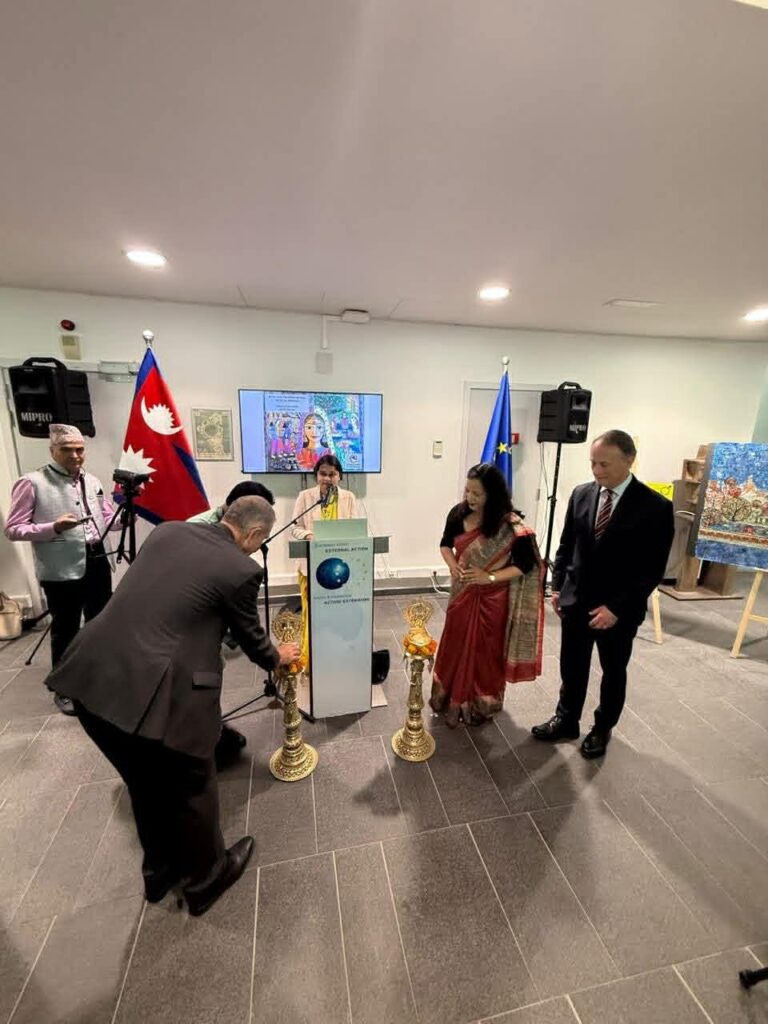
The opening ceremony, which began with the playing of Nepali and European Union anthems, was jointly lit by Nepal’s Ambassador to the Benelux countries Sewa Lamsal and Dominic Porter, Head of Mission to the European Union and Deputy Managing Director for Asia and the Pacific at the EEAS.
Pierre Cartuivels, Head of Protocol for Foreign Affairs, Foreign Trade and Development Cooperation of the FPS Belgium, and Amit Pratap Shah, President of the Mithila Center America, welcomed the guests and recounted the history of the rich and colorful Mithila art tradition in their opening remarks. Shah emphasized the importance of Mithila art not only as a cultural asset but also as a development tool, a diplomatic tool and a source of national pride.
Shah recalled, “Using natural pigments derived from turmeric, indigo, rice dust, and lampblack, women created paintings on mud walls and floors centuries before the existence of galleries or museums, tracing its origins to the ancient civilization center of the Mithila region, the birthplace of Goddess Sita.”
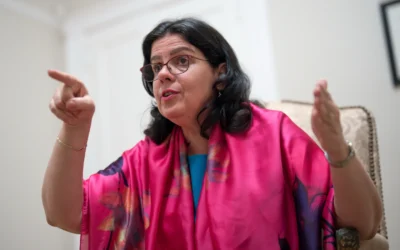
Highlighting Nepal’s commitment to preserving this living heritage, the Ambassador warmly invited the international community to visit Nepal to experience the art form in its true essence. She also expressed her gratitude to the EEAS for its support in organizing the event. She also thanked the Mithila Center USA for its significant support and advocacy in keeping this deep tradition alive, dedicating it to a generation of female artists.
Porter of the EEAS congratulated Ambassador Lamsal and the team for bringing the beauty and depth of Mithila heritage to Brussels. Acknowledging Nepal’s continued commitment to achieving the SDGs by 2030, he reiterated the EU’s commitment as a strong partner for Nepal in achieving the goals.
Envoy Cartuivels of the Belgian Ministry of Foreign Affairs highlighted the warm and cordial relations between Nepal and Belgium and praised the artworks created by Mithila women artists.
Representing Mithila Center USA, Shah shared his personal journey of Mithila art and its representation on international platforms, including the United Nations headquarters in New York. Looking ahead, Shah shared the organization’s visionary goal of establishing permanent museums of Mithila art in global regions.
Ambassador Lamsal honored Mithila artists and representatives of Mithila Center USA, S.C. Suman, Amit Pratap Shah, Naval Kishore Yadav, Prateek S. Rayamajhi and Shivangi Singh, with Mithila Scarf; a scarf featuring traditional Mithila folk art, for their significant contribution in the promotion of Mithila art. Artworks by Manisha Shah and Sunaina Thakur were also displayed at the exhibition. Mithila Scarf was also presented to the participating speakers and ambassadors as a token of appreciation.
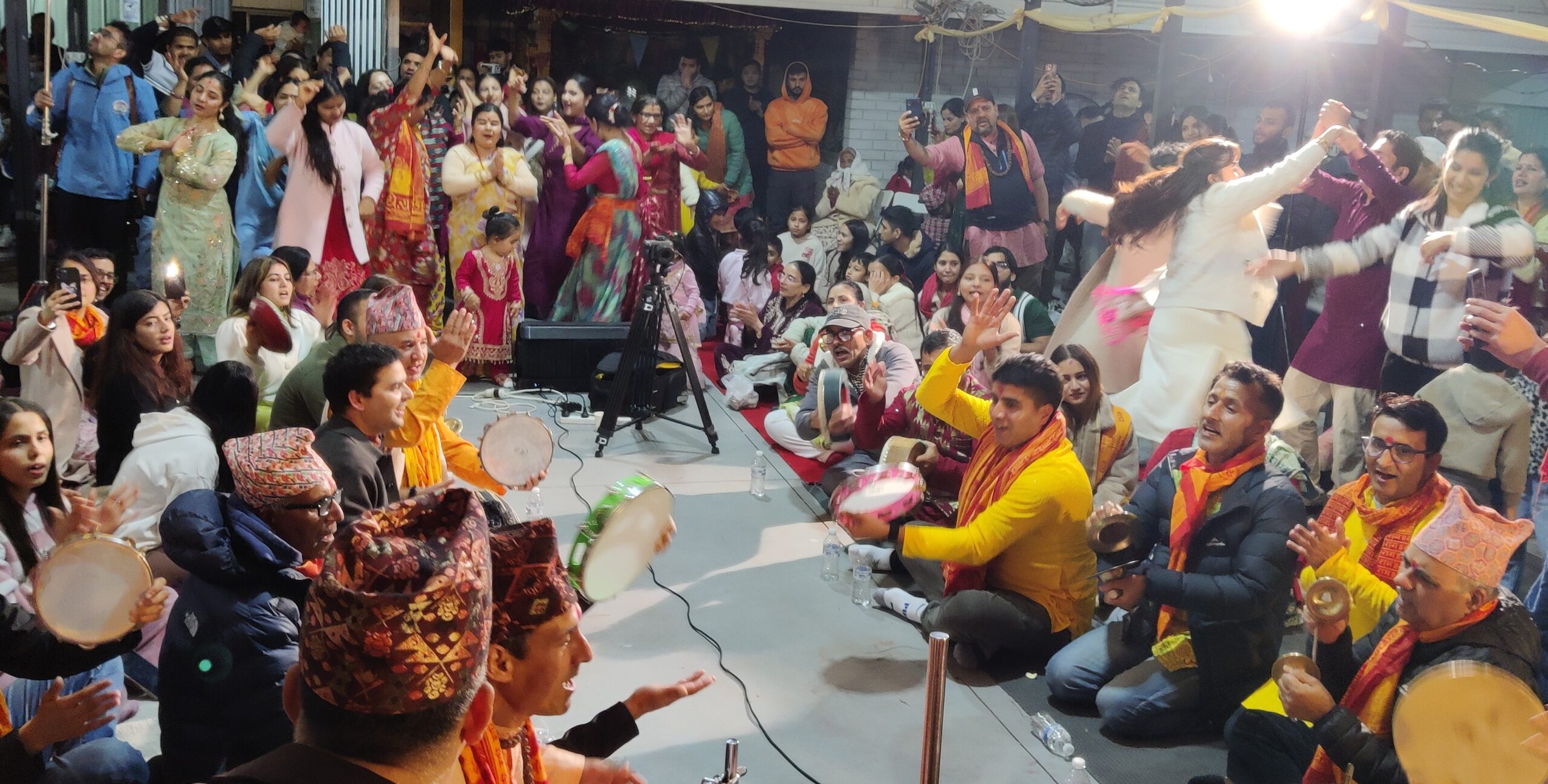
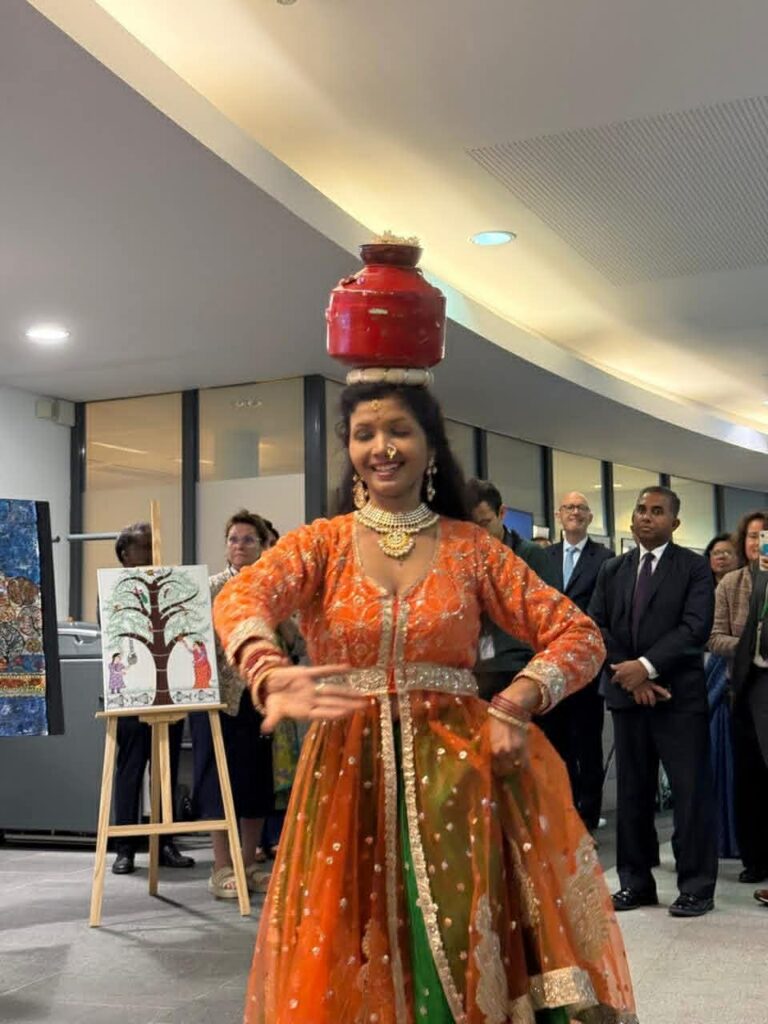
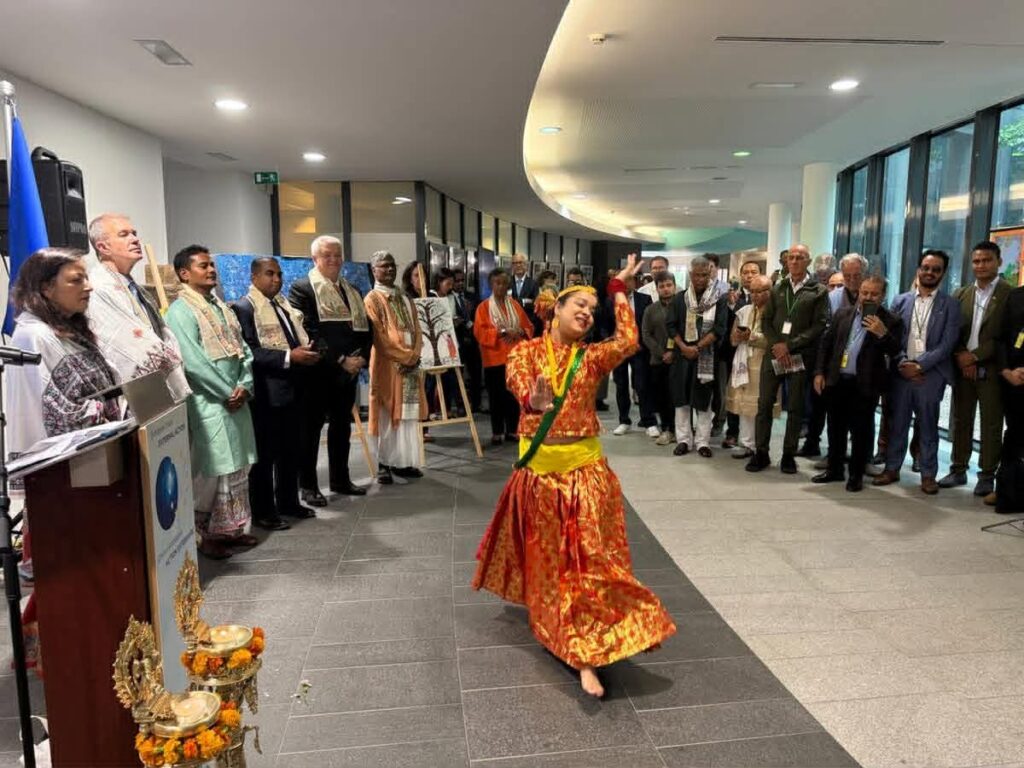
The event also featured live cultural performances by Nepali and Mithila artists. The artists, dressed in traditional attire, mesmerized the audience with their grandeur as they performed the traditional Maithili dance Jhijia and Nepali folk dance.
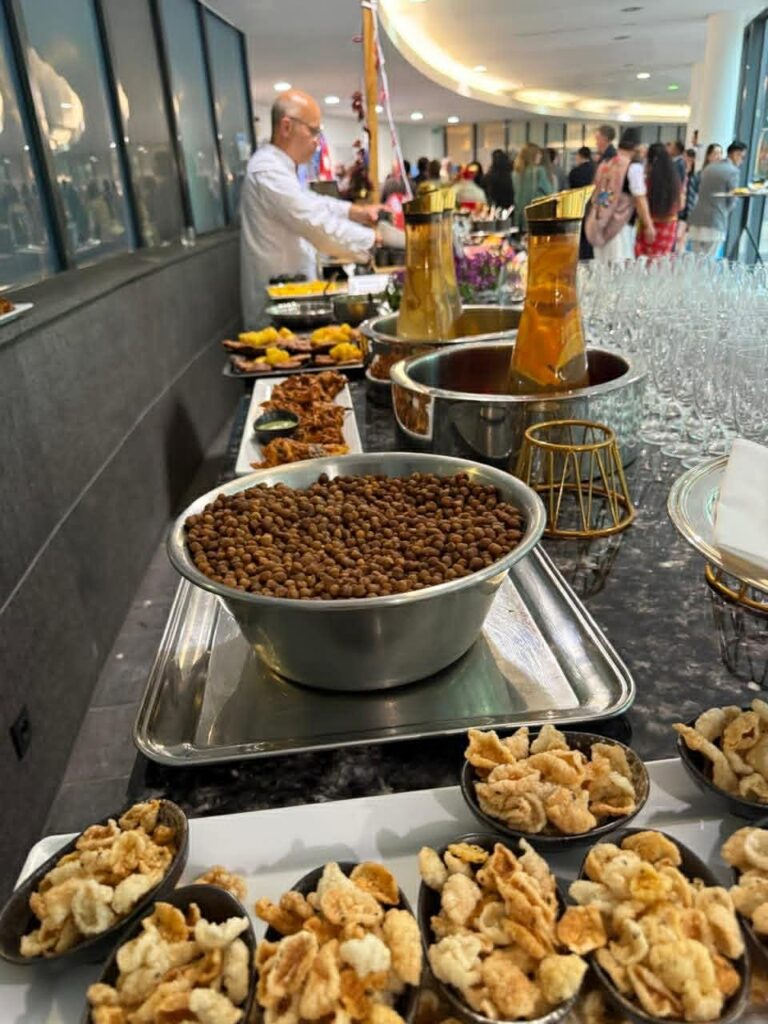
The program concluded with a tasting of Mithila cuisine, which included Thekuva, Kachari, Makhana Chaat, Phopi, Phulauri, Mango and Lassi. The distinguished guests viewed the colorful and intricate Mithila paintings of the exhibition with interest. A total of 33 Mithila artworks were displayed in the exhibition, which will remain on display till 20 June 2026.