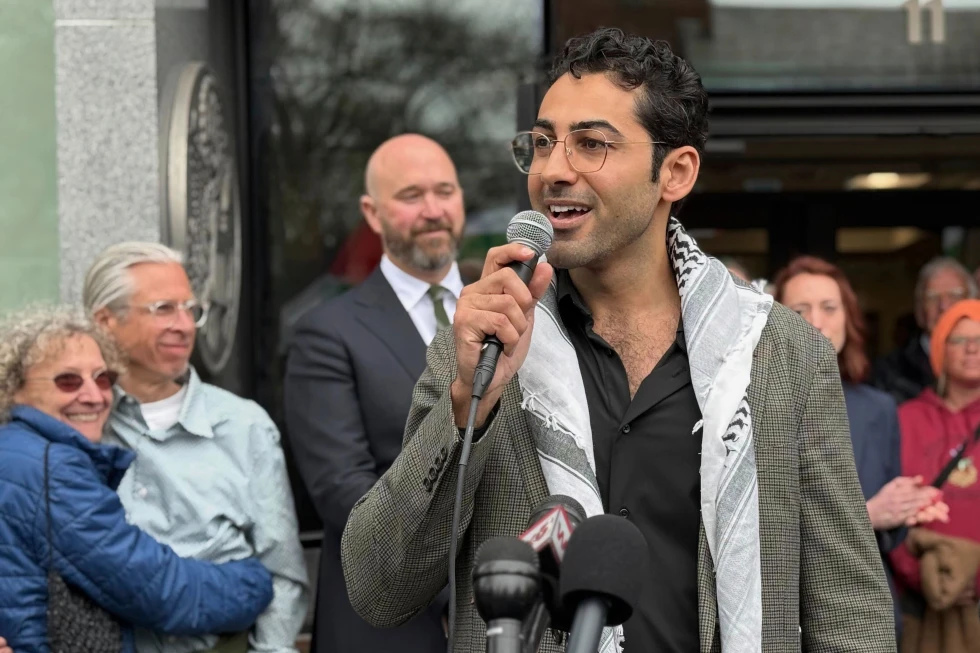
By JAKE OFFENHARTZ, NEW YORK (AP):- An immigration judge has blocked the Trump administration from deporting Mohsen Mahdawi, a Palestinian graduate student who led protests at Columbia University against Israel and the war in Gaza.
In a ruling made public Tuesday, the judge, Nina Froes, said she had terminated the case because of a procedural misstep by government attorneys, who failed to properly certify an official document they intended to use as evidence.
The Trump administration may appeal the decision. But the ruling marked the latest setback for the federal government’s sweeping effort to expel pro-Palestinian campus activists and others who expressed criticism of Israel.
Last month, a separate immigration judge blocked the government’s attempt to deport a Tufts University graduate student, Rümeysa Öztürk, over an op-ed criticizing the school’s response to the war in Gaza.
Mahdawi, a legal permanent resident of the U.S. for the last decade, was born in a refugee camp in the Israeli-occupied West Bank. He was arrested by immigration agents during a citizenship interview last April, but he was released two weeks later by a federal judge.
In the months since, the government has continued its effort to deport him, citing a memo from Secretary of State Marco Rubio arguing noncitizens can be expelled from the country if their presence may undermine U.S. foreign policy interests.
Government attorneys submitted a photocopy of the document to the immigration judge, but they failed to certify it as required under federal law, the judge wrote.
“I am grateful to the court for honoring the rule of law and holding the line against the government’s attempts to trample on due process,” Mahdawi said in a statement released by his attorneys. “This decision is an important step towards upholding what fear tried to destroy: the right to speak for peace and justice.”
Mahdawi has also mounted a separate case in federal district court arguing that he was unlawfully detained. That case remains ongoing, his lawyers said.
In an emailed statement, Tricia McLaughlin, a spokesperson for the Department of Homeland Security, cast Mahdawi as a leader of “pro-terrorist riots” whose visa should be revoked.
“No activist judge, not this one or any other, is going to stop us from doing that,” she added.










Comments