



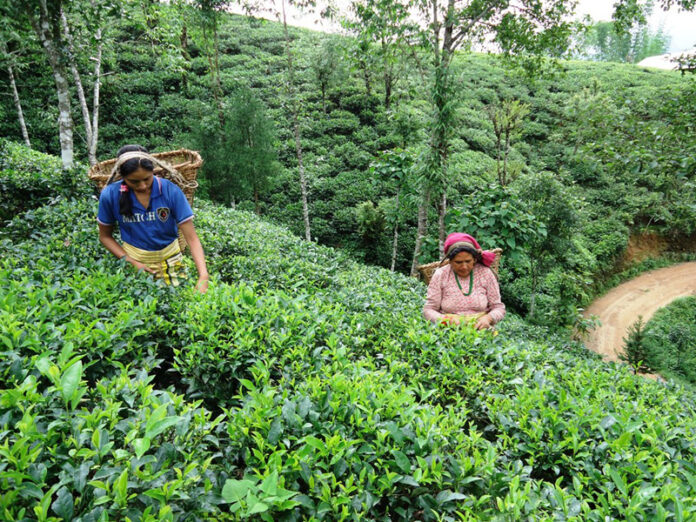
ILAM:- Following stricter restrictions on Nepali tea entering the Indian market, additional tea factories in Ilam have shut down since Thursday in support of already closed factories. The move comes as other factories joined the shutdown, demanding smooth export facilitation.
Even those certified as organic and exporting tea to third countries are also closed. According to Jeevan Neupane of the Tea Alliance of Nepal (TAN), a total of 16 factories from Ilam, Panchthar, Pokhara and Bhojpur affiliated with TAN have been shut down. In Ilam alone, 79 tea factories have closed. Similarly, from Thursday, 30 factories in Jhapa have also halted operations.
Tea entrepreneurs have warned that they will not resume operations until the government ensures smooth export and takes diplomatic initiatives to open foreign markets. “Tea is being wasted daily. The government is seeing it, hearing it. We are concerned about farmers’ tea, but the state has not treated tea as it should have, nor shown sufficient concern, which is why we were compelled to shut down the factories,” said tea entrepreneur Gyanu Subba.
“We met the Prime Minister, ministers and secretaries at the federal level and held discussions, but those discussions have remained inconclusive,” said Subba.
Entrepreneurs are increasingly frustrated as the shutdown continues for four days and more factories join in, while the government has not provided a reliable response or taken action. They have urged the government to ensure diplomatic facilitation for the smooth export of Nepali tea to India.
Supporting the shutdown, 30 tea factories in Jhapa have also been closed since Thursday.
Memorandum submitted at District Administration Office
Tea entrepreneurs and farmers submitted a memorandum to the Government of Nepal through the Chief District Officer of Ilam, urging facilitation for tea exports.
They gathered at the District Administration Office, Ilam, on Thursday and submitted the memorandum. It highlights issues related to tea export difficulties, resulting economic losses and damage to farmers due to unsold tea.
Farmer Bed Prasad Acharya, who came to submit the memorandum, said farmers are facing severe hardship.
“You can understand how angry farmers are by visiting their homes. We have come here only with restraint,” Acharya said.
“Farmers are in a situation where their kitchens are not being lit morning and evening due to unsold tea. Not only the government but also entrepreneurs are facing farmers’ anger. Hundreds of kilos of green tea leaves from every farm are being wasted. Even if factories reopen now, the tea will not sell at even half the previous price.”
Receiving the memorandum, Chief District Officer Laxman Dhakal said he had already informed the relevant ministries at the federal level multiple times and would continue to take the issue seriously.
Freight forwarders concerned about tea export hurdle
The Nepal Freight Forwarders Association has expressed serious concern over emerging complications in tea exports, one of Nepal’s key export commodities, citing procedural barriers in the Indian market.
Issuing a press statement, the Association said processed tea exported from Nepal to India has been held in warehouses for extended periods due to laboratory testing and other technical procedures imposed by the Indian side.
It said this situation has disrupted production, sales distribution, and the overall export chain of Nepal’s tea industry.
According to the Association, tea industries in eastern Nepal have begun shutting down, while hundreds of tea gardens have been affected due to the prolonged obstruction in exports.
The Association noted that the tea sector is directly linked to around 120 industries across the country, involving thousands of farmers and providing employment to approximately 50,000 to 60,000 workers.
It said the current disruption has negatively impacted export trade, foreign currency earnings, and the broader national economy.
It further stated that since a large share of Nepal’s tea exports depends on the Indian market, the ongoing obstruction has affected not only entrepreneurs and exporters but also the wider economy.
Acknowledging the sector’s contribution to export promotion and trade facilitation, the Association urged the government to prioritise the issue and initiate immediate diplomatic efforts.
It also called for high-level dialogue with concerned Indian authorities to remove procedural and technical barriers and ensure smooth and uninterrupted trade.
The Association said it remains committed to strengthening Nepal’s export trade and supply chain system, and expressed solidarity with tea industries, exporters, and other stakeholders during the ongoing challenges.