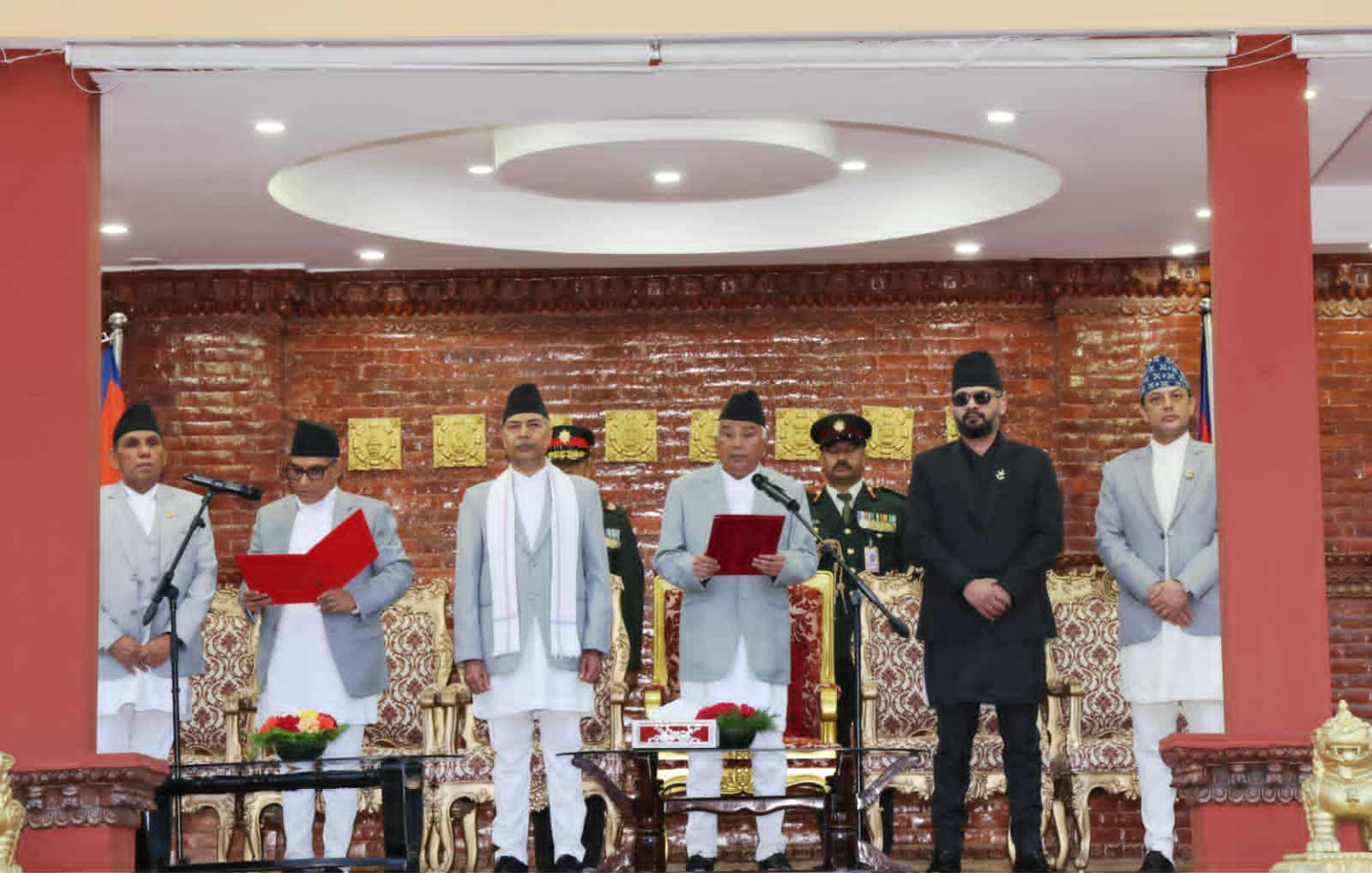
Nepal’s judiciary, particularly the Supreme Court of Nepal, currently stands at a deeply significant institutional crossroads. On one side, the judicial system faces growing public criticism over delays, case backlogs, administrative controversies, procedural inefficiencies, and declining public trust. On the other hand, the appointment of newly sworn-in Chief Justice Dr. Manoj Kumar Sharma has created cautious optimism that meaningful judicial reform and modernization may finally move forward.
Upon assuming office, Chief Justice Sharma made strong public commitments emphasizing judicial independence, transparency, modernization through information technology, virtual hearings, procedural simplification, and zero tolerance toward interference in the judicial process. He also highlighted the urgent need to reduce delays, strengthen institutional governance, and improve public confidence in the judiciary.
These commitments come at a particularly sensitive moment for Nepal’s judicial system. The judiciary today is not only dealing with legal and administrative pressures, but also with a growing crisis of public confidence.
In recent parliamentary discussions, voices have emerged calling for investigations into alleged “Akut Sampatti” or unexplained wealth connected to judges and high judicial officials. Although the issue is highly sensitive, it has become part of a wider national debate concerning transparency, accountability, and public trust in state institutions.
The concern is not simply political. In any democratic system, the credibility of the judiciary depends not only on constitutional authority but also on public confidence in the integrity, impartiality, and ethical standing of judges and judicial institutions.
According to judicial statistics for Fiscal Year 2081/82, Nepal’s courts are carrying an enormous caseload. Out of more than 371,000 registered cases nationwide, over 145,000 cases remain pending. Most concerning is the situation within the Supreme Court itself. Out of 39,347 registered cases, only 15,561 cases were resolved, leaving 23,786 cases pending. The disposal rate stands at only 39.5 percent, the weakest performance within the judicial hierarchy.
This situation reflects more than simply a backlog problem. It points toward broader structural weaknesses within Nepal’s judicial administration and case management systems. Repeated adjournments, delayed hearings, outdated administrative procedures, weak digital infrastructure, excessive procedural complexity, lack of accountability mechanisms, and slow bureaucratic workflows continue to undermine efficiency.
At the same time, recent administrative controversies have further intensified public concern regarding institutional governance within the judiciary itself.
One of the most controversial incidents involved the refusal by the Supreme Court administration to register writ petitions challenging the recommendation of Chief Justice Sharma. The matter escalated significantly until Acting Chief Justice Sapana Pradhan Malla intervened and ordered the registration of the petitions. The incident raised serious constitutional and institutional questions regarding transparency, accountability, and access to justice.
The controversy generated broader public debate. Many questioned whether court administration should possess the authority to block the registration of constitutional petitions and whether internal judicial governance mechanisms remain sufficiently transparent and accountable. The subsequent lantern protest organized by the Nepal Bar Association further reflected growing dissatisfaction and mistrust toward judicial administration.
These developments demonstrate that Nepal’s judiciary is currently facing not only a case management crisis but also a credibility crisis.
Despite these challenges, the current moment may also represent a rare opportunity for transformation. Chief Justice Sharma’s emphasis on digital transformation, judicial independence, transparency, accountability, and procedural reform directly addresses many of the concerns repeatedly raised by lawyers, litigants, civil society organizations, and policy observers.
However, speeches and public commitments alone will not restore confidence. The success of the judiciary will now depend entirely on implementation.
Across the world, modern judicial systems are increasingly adopting AI-assisted legal research, e-filing systems, automated scheduling, digital evidence management, virtual hearings, and real-time judicial dashboards. Many countries have moved rapidly toward technology-driven judicial governance designed to reduce delays and improve public accessibility.
Nepal’s judiciary, however, still remains heavily dependent on paper-based procedures, manual case tracking systems, discretionary administrative practices, and traditional bureaucratic culture. The gap between Nepal’s judicial infrastructure and modern global judicial practices is becoming increasingly visible.
If Nepal’s Supreme Court is to regain public trust and institutional credibility, reform must become practical, measurable, and operational rather than remaining limited to policy statements and ceremonial commitments.
Several reforms appear urgently necessary. Full digital filing systems, AI-supported case management tools, stronger control over unnecessary adjournments, fast-track constitutional and public interest benches, transparent administrative review systems, real-time public case tracking dashboards, performance evaluation mechanisms, and institutional governance audits are increasingly becoming unavoidable requirements rather than optional reforms.
Equally important is the need to strengthen transparency within judicial administration itself. When even the registration of writ petitions becomes controversial, the issue extends beyond administrative procedure and directly affects constitutional governance and public trust in the rule of law.
Chief Justice Sharma correctly stated that public confidence is the judiciary’s greatest strength. However, public trust cannot be maintained solely through constitutional authority or official statements. It must be earned through efficiency, fairness, transparency, accessibility, consistency, and visible institutional integrity.
The Supreme Court is not merely another state institution. It is the ultimate guardian of constitutional democracy, civil liberties, human rights, and the rule of law in Nepal. If delays, opacity, administrative disputes, and institutional inefficiencies continue unchecked, the consequences will extend beyond the judiciary itself and may ultimately affect governance, economic confidence, democratic stability, and public faith in state institutions.
Honourable Chief Justice Dr. Manoj Kumar Sharma now faces both an extraordinary challenge and a historic opportunity. If his administration succeeds in implementing meaningful digital transformation, transparent judicial governance, and measurable institutional reforms, this period could become a defining turning point for Nepal’s judiciary. If not, the growing backlog, administrative controversies, procedural inefficiencies, and declining public confidence may deepen further.
Nepal’s judiciary can no longer function effectively through outdated systems and traditional administrative culture alone. The demands of the present era are clear. Nepal now requires a modern, transparent, accountable, digital, and citizen-centered judiciary capable of delivering timely and trustworthy justice to its people.

(Author Purna Adhikari is a retired United Nations (UN) official with extensive experience in public administration, financial management, research, international systems, and policy in Nepal, Africa, Canada, and the United States.)










Comments