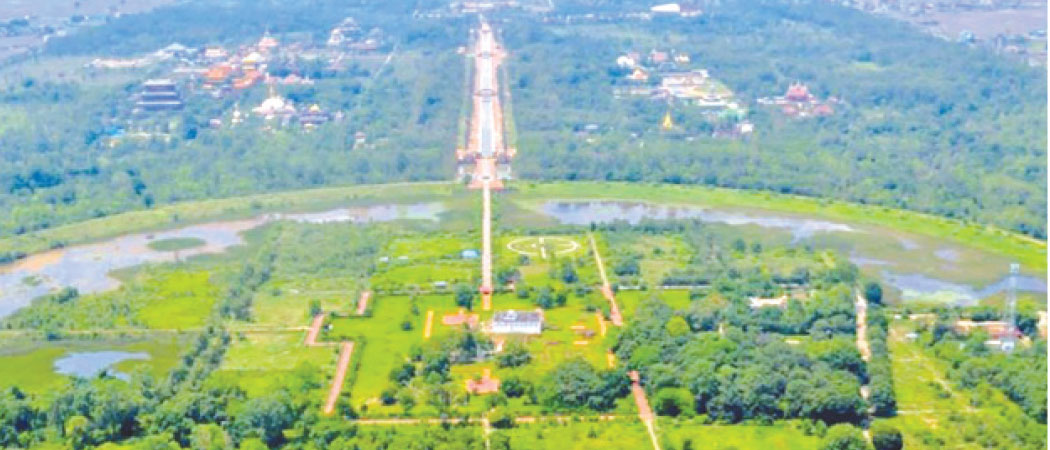
KAPILBASTU:- The World Bank has approved a loan of approximately Rs. 12.5 billion for the implementation of the proposed ‘Greater Lumbini’ project, which aims to develop Lumbini as its centre while encompassing Rupandehi, Kapilvastu, and West Nawalparasi.
According to Gyanin Rai, Senior Director of the Lumbini Development Trust, the World Bank’s board meeting decided to provide a loan of USD 85 million (around Rs. 12.35 billion). The decision was made based on a proposal submitted by the Government of Nepal.
The project will come into effect only after the loan is approved by the Cabinet of Nepal, and a formal agreement is signed with the World Bank.
The government has advanced the project with the objective of developing a Greater Lumbini area, incorporating Devdaha in Rupandehi, Tilaurakot in Kapilvastu, and Ramgram in West Nawalparasi. The initiative is said to have been strongly supported by former Finance Minister Bishnu Prasad Paudel.
Following implementation, investment will be made in the overall development of historical and religious sites associated with the Buddha across the three districts. With Lumbini as the focal point, priority will be given to building infrastructure for pilgrims and tourists, expanding services, and promoting regional development, Rai said.
Under the project, Lumbini Cultural Municipality, Devdaha Municipality, Ramgram Municipality, and Kapilvastu Municipality will be directly involved. The Department of Archaeology Nepal, the Lumbini Development Trust, and the Nepal Tourism Board will also participate. The Ministry of Urban Development and the Ministry of Culture, Tourism and Civil Aviation will lead the project.
Plans include constructing basic infrastructure such as roads, drainage systems, bus parks, and electrification. Additionally, facilities targeting Buddhist pilgrims such as meditation centres, rest areas, cafés, information centers, and outlets for local products will be established.
Lumbini is a UNESCO World Heritage Site, home to historically significant landmarks, including the Maya Devi Temple, the exact birthplace of Buddha, the sacred Pushkarini pond, and the Ashoka Pillar. Devdaha is known as the maternal home of Buddha, while Tilaurakot in Kapilvastu is the ancient capital of the Shakya kingdom, where Siddhartha Gautama spent his childhood. Ramgram Stupa in West Nawalparasi is believed to be the only stupa that still preserves the original relics of Buddha.
In the first phase, the project will focus on these major Buddhist heritage sites. A detailed implementation plan will be made public after the agreement between the Government of Nepal and the World Bank is finalised.
According to Rai, although efforts to secure funding for the project began several years ago, significant progress has been achieved over the past year through continuous efforts. The proposal was submitted to the World Bank last year through the Ministry of Finance.
Earlier, all four local governments under the Buddha Circuit had jointly submitted a memorandum to the World Bank, seeking to secure USD 8 million in funding for each.
The main objective of the project is to establish Lumbini as an international spiritual, cultural, and tourism hub. It also aims to promote regional infrastructure development, expand economic activities, create employment opportunities, and advance sustainable urban development in an integrated manner. The project further prioritises heritage conservation, good governance, and the livelihoods of local communities.




Comments